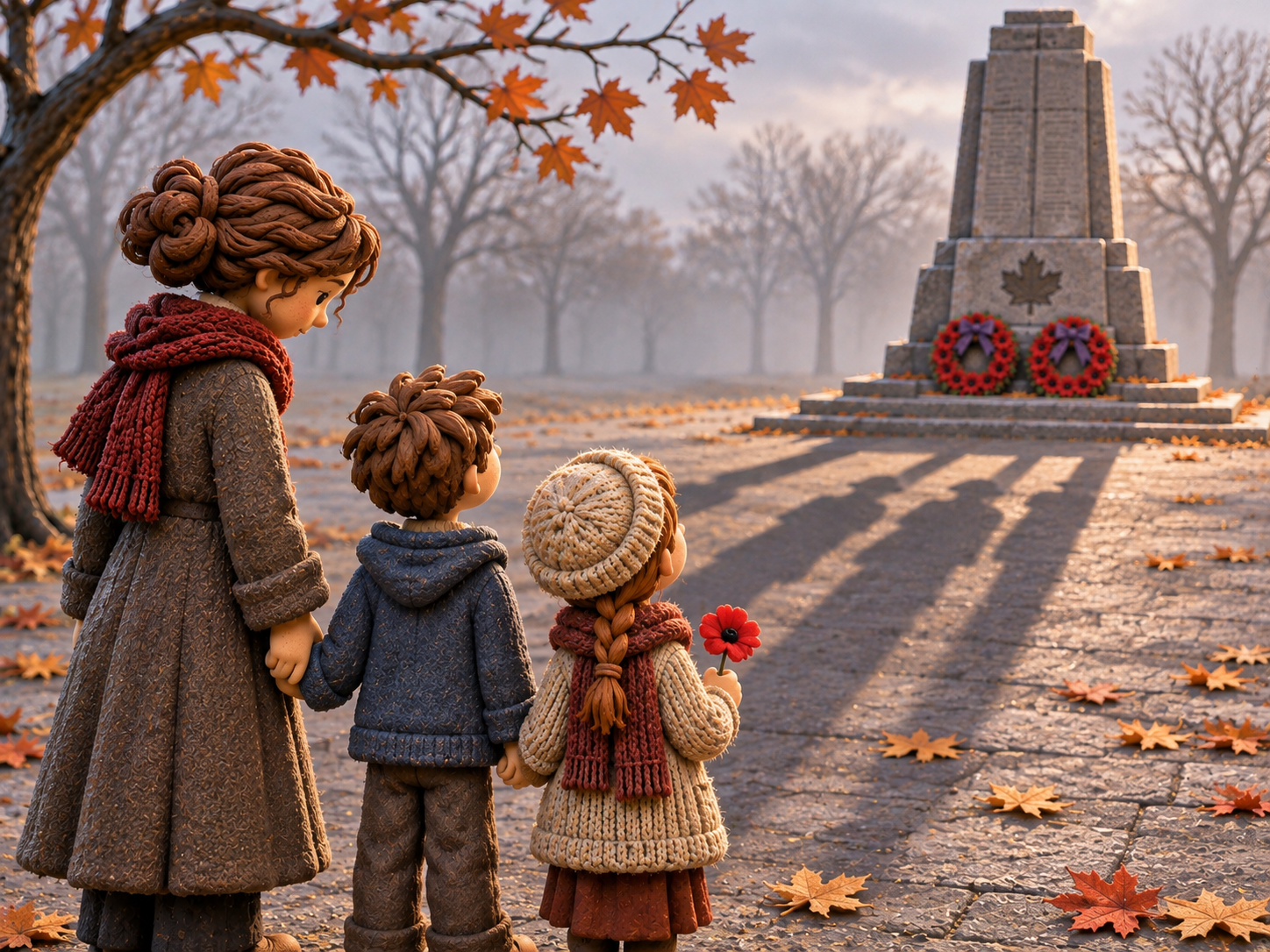
Every November 11, Canadians gather at cenotaphs, wear their poppies, listen to the Last Post, and stand in silence. We remember those who went to war, those who never came home, and those who returned forever changed by what they experienced. These traditions matter. But lately, I’ve been wondering whether we’ve become so concerned with how we remember that we’ve lost sight of why we remember.
In the Hebrew Scriptures, the word zakar means “to remember.” But remembering in the Bible is often much more than thinking about something that happened in the past. When God remembers Noah, the flood begins to recede. When the people of Israel are told to remember their slavery in Egypt, they are expected to treat strangers, widows, and orphans differently because of it. Remembering isn’t simply an exercise in looking backward. It is supposed to change what we do next. Remembrance is a verb.
I sometimes worry that Remembrance Day has become almost sacred in itself. Over the past decade or so, there seems to have been an increasing emphasis on honouring the fallen, sometimes to the point where questioning war itself can feel disrespectful. But there is a difference between honouring those who died and treating their deaths as something holy. We can respect their courage and sacrifice without pretending that every war was necessary, every decision was wise, or every death was unavoidable. Remembrance Day should never be beyond questioning. In many ways, it is an annual judgment on humanity for continuing to create circumstances in which young people are asked to kill and die.
Consider the parents who watched their sons leave for the Second World War. Many had lived through the First World War themselves. They knew what the trenches had been like, what poison gas could do, and what it meant to lose friends and brothers. The war that was supposed to end all wars had ended only twenty-one years earlier, and now their children were going off to fight another one. Imagine standing at a railway station, saying goodbye to your son, knowing far too much about what might happen to him. There is a particular kind of grief in fearing a loss before it has even happened.
And I wonder whether we’re beginning to experience something similar today. We hear increasing talk of military readiness, rising international tensions, and the possibility of another major war. Of course nations must be able to defend themselves and protect people against aggression. But are we preparing to prevent the next war, or are we becoming resigned to its arrival? Are we teaching our children that peace is something worth working for, or quietly preparing them to become the next generation whose names will be carved into stone? For a parent, that is a terrifying distinction.
Jesus said, “Blessed are the peacemakers.” Not simply those who wish for peace, but those who make it. Peace takes work. It requires courage, diplomacy, justice, patience, and the willingness to recognize the humanity of people we may not particularly like. It means addressing the conditions that lead to violence before the shooting begins. And it means holding leaders accountable for the decisions they make, especially when the consequences of those decisions will be borne by people who had little say in making them.
Perhaps the greatest danger is that our ceremonies can become a substitute for that responsibility. We lay wreaths, recite familiar words, and promise that we will never forget. But what happens when the silence ends? Do we ask difficult questions about the world we’re creating? Do we challenge the language that makes war sound inevitable or glorious? Do we care as deeply about protecting the children who are alive today as we do about honouring those who died generations ago? If remembrance doesn’t change what we do, what exactly are we remembering for?
On November 11, I will remember. I will honour those who served, grieve those who died, and give thanks for the peace their sacrifices helped secure. But I will also think about the children and grandchildren standing beside us at those ceremonies. Their names are not on the monuments, and I desperately want them to stay that way. Perhaps the greatest tribute we can offer the dead is not another wreath or another speech, but a determination to build a world in which fewer families will ever have to make that sacrifice again. Remembrance is a verb. And its work is not finished.


Leave a Reply