Lately, I have been thinking a great deal about the word enough. Enough money. Enough time. Enough energy. Enough work. Enough rest. We spend so much of our lives chasing the next thing, convinced that happiness, security, or peace are waiting just beyond the next promotion, the next house, the next relationship, or the next accomplishment. Yet even when we arrive at the place we once longed for, the question remains: what does enough actually look like?
Jesus spoke often about wealth and possessions, but rarely in simple terms. The problem was never that people wanted food on the table, a safe home, or a future filled with joy. The challenge came when abundance became the goal itself, when accumulation replaced compassion, or when fear convinced us that there could never be enough to go around. In God’s Community, the measure of a good life is not found in overflowing barns or crowded closets, but in relationships marked by justice, generosity, and love.
Of course, there is another side to the question. For many people, enough is not an abstract theological problem; it is an everyday struggle. Enough groceries to last until payday. Enough strength to get through another shift at work. Enough money to pay the bills and still buy a birthday present for a grandchild. The prayer, “Give us this day our daily bread,” sounds very different when daily bread is uncertain. Before we talk about contentment, we must acknowledge that countless people are still waiting for the basics.
At the same time, I wonder whether enough has as much to do with trust as it does with numbers. The earliest followers of Jesus shared meals, resources, and responsibilities because they believed that life was not meant to be carried alone. God’s Kindom is built not on endless individual striving, but on communities where burdens are shared and where no one is left to fend for themselves. Perhaps enough begins when we stop asking, “Do I have enough for myself?” and start asking, “Do we have enough for one another?”
That does not mean abandoning our dreams. There is nothing wrong with wanting a beautiful home, meaningful work, financial stability, or adventures still to come. Hope is holy. Ambition can be life-giving. The question is not whether we desire more, but whether our desires lead us toward greater freedom, deeper relationships, and a wider table, or whether they leave us perpetually convinced that we are one step away from satisfaction.
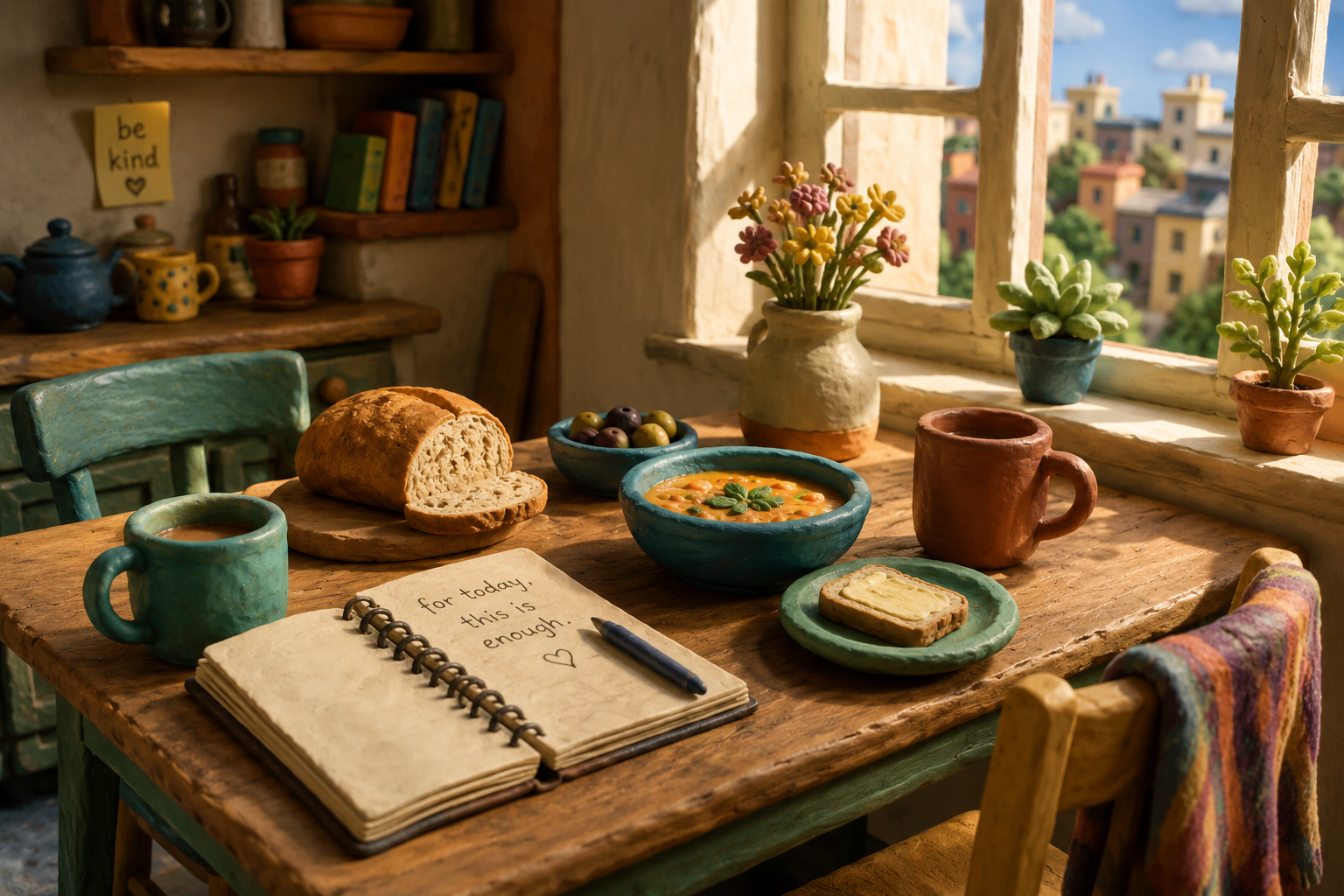
Maybe enough is not a destination that we reach once and for all. Maybe it is a practice of gratitude, generosity, and honesty. It is the ability to look around at the people we love, the food before us, the gifts we have been given, and the possibilities that still lie ahead, and say: for today, this is enough. Tomorrow may ask something different of us. But for today, there is bread to share, work to do, and grace enough for the journey.


Leave a Reply