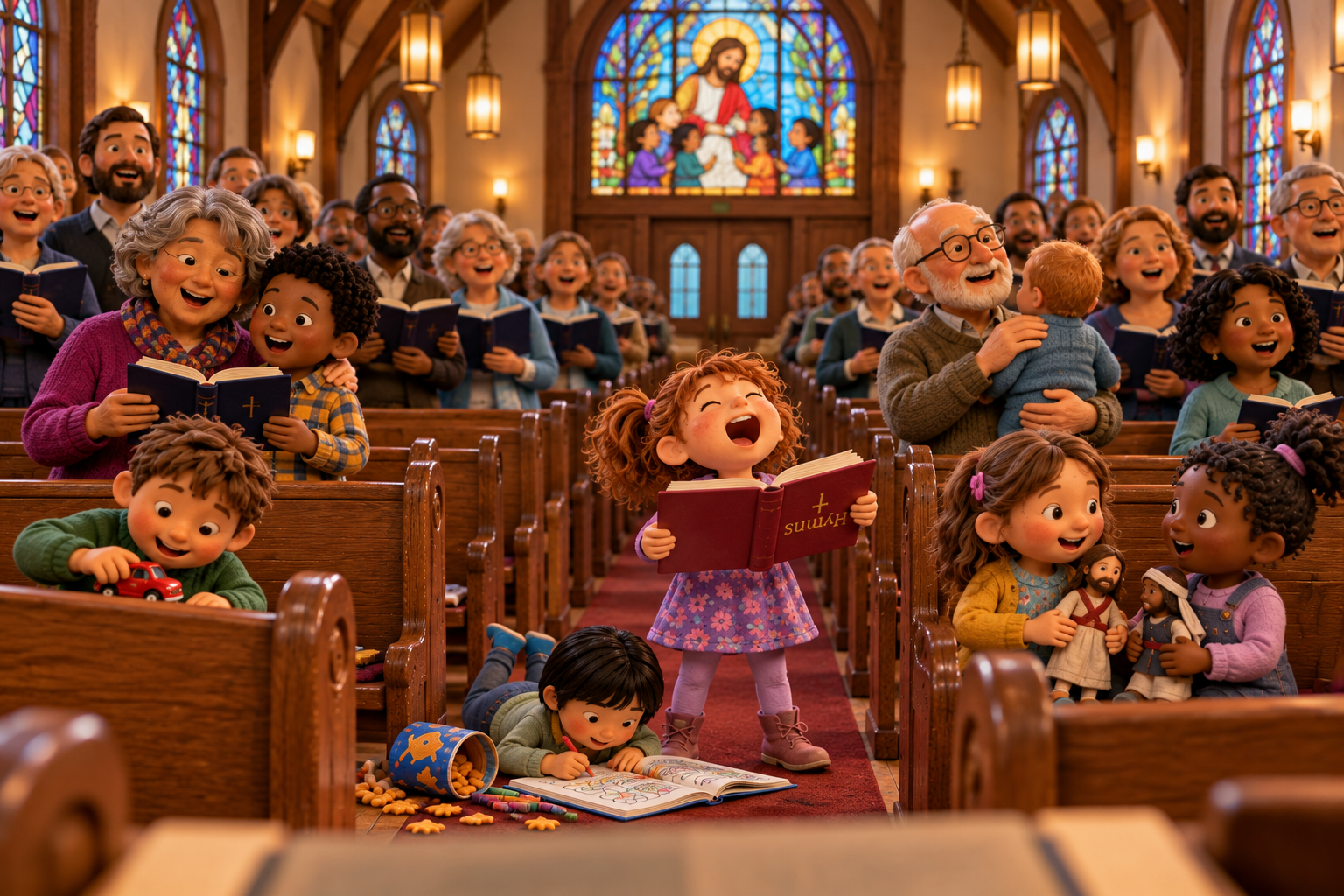
Watch a group of children when nobody has told them what to do with their bodies. They sprawl. They squat. They climb onto things. They sit sideways, upside down, cross-legged and occasionally on top of each other. They move while they talk and talk while they move. Then we send them to school, church, concerts and meetings and begin the long process of teaching them that respectable people apparently experience life from a chair.
Sitting still has become so tangled up with our idea of a “good child” that we rarely stop to question it. A child who sits quietly, faces forward and keeps their hands to themselves is praised for behaving well. The child who rocks, fidgets, stands, doodles or needs to wander is disruptive. Somewhere along the way, we confused being still with paying attention.
It wasn’t always quite like this. For much of human history, children learned while doing. They worked alongside adults, followed older children, carried things, fetched things, watched skilled hands and gradually tried the work themselves. Even formal education did not always involve spending most of the day individually parked at a desk. The familiar classroom of rows, bells, timetables and large groups of children doing the same thing at the same time developed alongside mass schooling and an increasingly industrialized world. When you have thirty children and one teacher, stillness is remarkably convenient.
Churches learned the same trick. Put everyone in rows, face them in one direction and make one person responsible for what happens next. Then bring the children into that arrangement and expect their bodies to cooperate. We have sometimes treated a child whispering, wriggling or turning around during worship as though they were doing something morally wrong, rather than behaving remarkably like a child who has been asked to occupy the same square metre for an hour.
The odd thing is that adults don’t actually sit still particularly well either. We cross our legs and uncross them. We sip coffee. We click pens. We check our phones. We knit during meetings, doodle in margins and get up to use the bathroom whether we desperately need to or not. Give adults a long enough conference and watch how many suddenly discover an urgent need to investigate the refreshment table. We simply have more socially acceptable ways to move.
And movement is not necessarily the enemy of attention. Sometimes it is what makes attention possible. The child whose hands are busy may still be listening. The child standing at the back may be taking in far more than the child sitting beautifully in the front row while mentally exploring another galaxy. Bodies are not inconvenient containers we drag around beneath our brains. They are part of how we encounter, explore and learn about the world.
That doesn’t mean children should be free to ricochet off the furniture whenever the mood strikes. Living with other people requires learning when our bodies are interfering with someone else. There are moments when quiet matters, when safety requires following directions, and when another person deserves enough space to concentrate. But that is a much more useful lesson than simply teaching children that good equals still.
Perhaps we could ask a different question when a child starts to wiggle: not How do I make this child sit still? but Does this child actually need to sit still right now? Sometimes the answer will be yes. Quite often, I suspect, the answer will be no. And perhaps a few more children could grow up knowing that there was never anything wrong with having a body that wanted to move.


Leave a comment