Have you ever wondered…
Why is life unfair?
Why do bad things happen to good people?
Is life fair?
What is the difference between equality and equity?
Is treating everyone the same fair?
Why do some people have more than others?
Can something be fair and still feel unfair?
Is forgiveness the same as justice?
Can mercy and justice exist together?
Should everyone get a second chance?
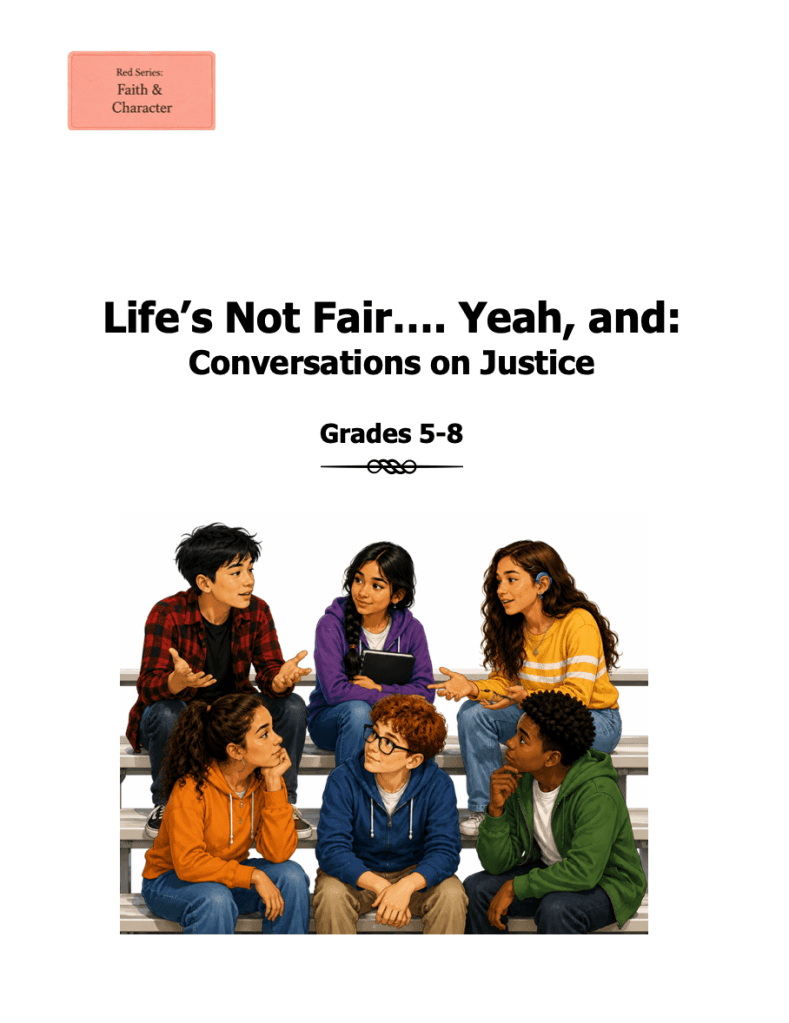
If you’ve ever asked questions like these, you’re not alone. Every day, people argue about fairness, justice, punishment, mercy, and whether everyone should be treated the same. Through stories from Scripture, thoughtful conversations, and critical-thinking activities, this workbook invites young people to wrestle with some of life’s hardest questions and discover that people can see the same situation in very different ways.
In this workbook you will discover:
Explore four biblical stories that challenge our ideas about fairness, justice, equality, mercy, and forgiveness. Through debates, reflection questions, and critical-thinking exercises, students will consider why good people suffer, whether second chances are fair, and how compassion and justice can exist together. Along the way, they will learn that life is complicated and that understanding another person’s perspective matters.
What is inside?
- Four conversations from Scripture: Joseph and his brothers, the workers in the vineyard, the Good Samaritan, and the Prodigal Son
- Real-life situations and discussion starters about fairness
- Debates about equality, equity, justice, and mercy
- Reflection questions and writing prompts
- Critical-thinking activities about common mistakes people make when arguing about fairness
- Conversations about forgiveness, second chances, and compassion
- Opportunities to defend, challenge, and rethink your own ideas
Who is the workbook for?
- Middle-school students in Grades 5–8
- Homeschool families
- Christian schools and classrooms
- Youth groups and confirmation classes
- Parents who want meaningful conversations about fairness and justice
- Teachers exploring ethics, critical thinking, and character education
Why should this matter to me?
Life does not always feel fair. Sometimes people are treated differently, sometimes hard work goes unnoticed, and sometimes people receive mercy when others think they deserve punishment. This workbook does not tell students what to think. Instead, it encourages them to ask better questions, listen to different perspectives, and think more deeply about justice, mercy, and compassion.
Where can I buy this?
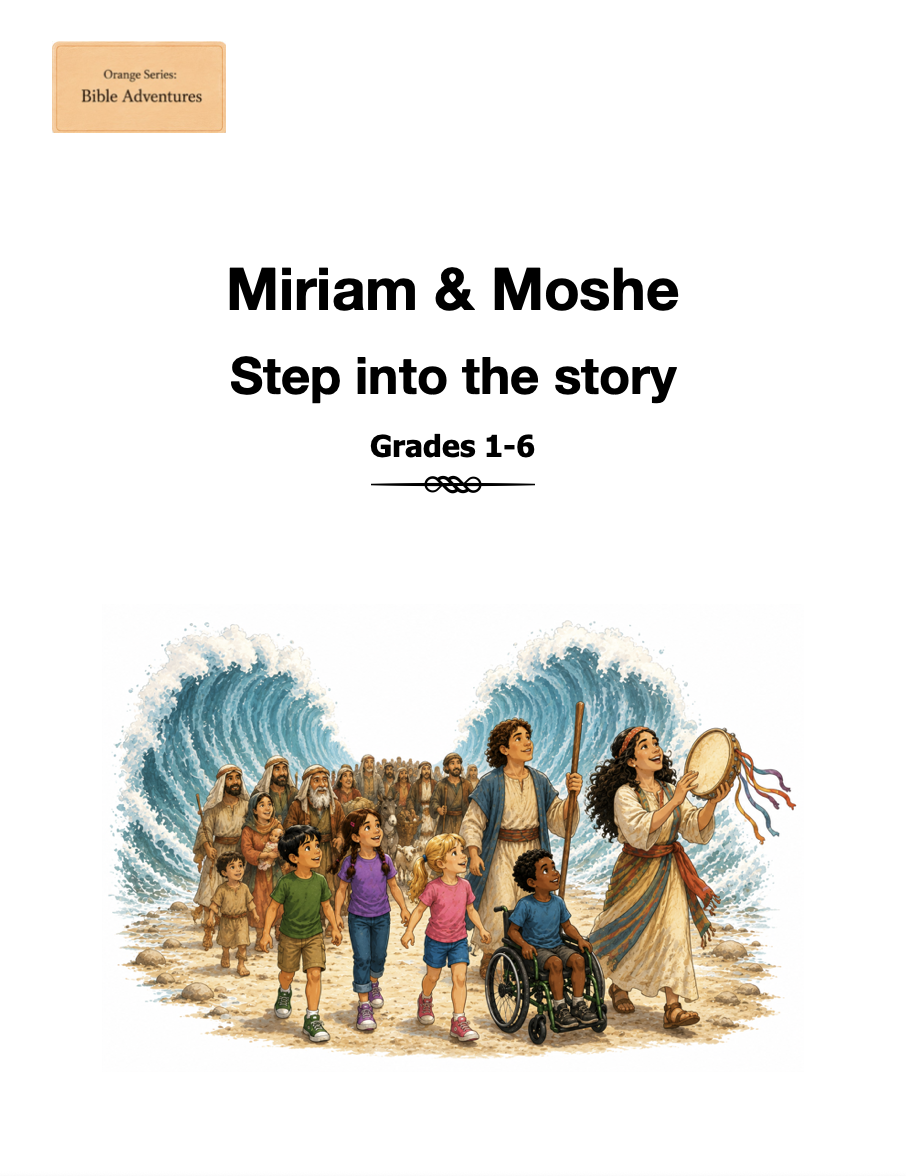
Related Resources:

Frequently asked Questions:
What age is this workbook for?
The recommended age range appears on the cover. Use it as a guide rather than a rule.
Is this a printable PDF?
Yes. You’ll receive a digital PDF to print at home or in the classroom.
Can I use this in Sunday School?
Yes. These workbooks work well for individual lessons or longer teaching series.
Can I use this for homeschooling?
Absolutely. They were designed with homeschool families in mind.
Can I use this in my classroom?
Yes. They’re suitable for Christian schools and, where appropriate, for studying the Bible as history or literature.
Do I need a Bible?
Helpful, but not always. Scripture references are included where appropriate.
Are the answers included?
Yes, where an activity has a specific correct answer.
Can I print more than one copy?
Please see the licence included with your purchase.
Do I have to be Christian to use these workbooks?
No. They’re also suitable for people exploring the Bible as history, literature, or culture.
Are these tied to one denomination?
No. They draw on the shared Christian tradition while encouraging curiosity and thoughtful learning.
 The Barefoot Evangelist