Have you ever wondered…
What is the Trinity?
Why isn’t the word Trinity in the Bible?
How can God be one and three at the same time?
What happened at the Council of Nicaea?
Why do Christians believe in the Trinity?
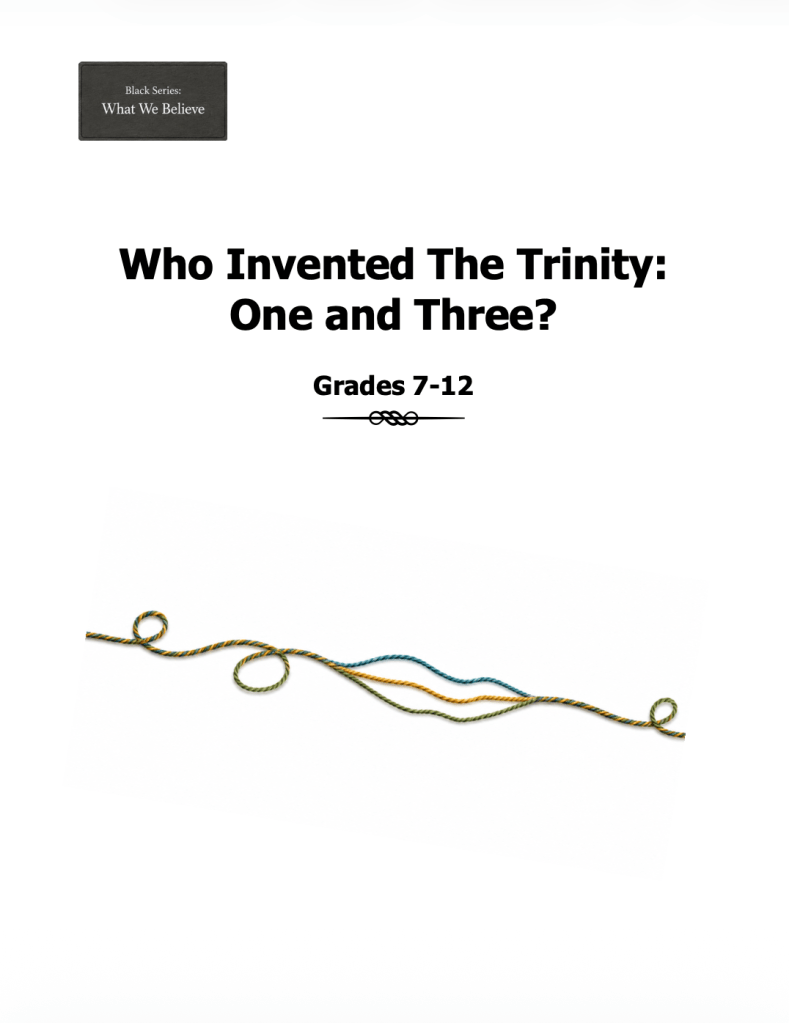
If you’ve ever wondered about these questions, you’re in the right place. Through Scripture, history, timelines, puzzles, and thoughtful activities, this workbook explores one of Christianity’s most important beliefs and the people who helped shape it.
In this workbook you will discover:
Discover how the doctrine of the Trinity developed during the first centuries of Christianity. Through Scripture, history, timelines, biographies, maps, and engaging activities, you’ll explore the debates that shaped the early Church, meet key figures such as Arius and Athanasius, examine the Council of Nicaea, and discover why Christians continue to describe God as Father, Son, and Holy Spirit.
What is inside?
- Introduction to the Trinity and early Christian beliefs
- What Christians mean by “God”
- The Messiah and the identity of Jesus
- Names of Jesus word search
- Early Christian views of the Trinity
- Theophilus of Antioch and the first use of Trias
- Build-your-own Trinity pyramid activity
- Trinity timeline
- Arius and Athanasius
- The Council of Nicaea
- The legend of St. Nicholas and Arius
- Homoousios vs. Homoiousios explained
- The Nicene Creed
- Persona and early Christian language
- Medieval attempts to explain the Trinity
- Crossword puzzle
- Reflection and discussion questions
- Student reflection pages
- Three-page glossary
- Teacher and parent guide
Who is the workbook for?
- Church history
- Christian history
- Confirmation and catechism classes
- High school Bible courses
- Homeschool
- Christian schools
- Youth groups
- Adult education
- Independent study
Why should this matter to me?
The Trinity has shaped Christian worship, prayer, art, music, and belief for almost two thousand years. If you’ve ever wondered why Christians baptize “in the name of the Father, and of the Son, and of the Holy Spirit,” or why the early Church argued so passionately about who Jesus was, then understanding the Trinity helps make sense of Christian history. Even if you don’t identify as Christian, it’s one of those ideas that’s difficult to understand our culture without knowing.
Where can I buy this?

Related Resources:


Frequently asked Questions:
What age is this workbook for?
The recommended age range appears on the cover. Use it as a guide rather than a rule.
Is this a printable PDF?
Yes. You’ll receive a digital PDF to print at home or in the classroom.
Can I use this in Sunday School?
Yes. These workbooks work well for individual lessons or longer teaching series.
Can I use this for homeschooling?
Absolutely. They were designed with homeschool families in mind.
Can I use this in my classroom?
Yes. They’re suitable for Christian schools and, where appropriate, for studying the Bible as history or literature.
Do I need a Bible?
Helpful, but not always. Scripture references are included where appropriate.
Are the answers included?
Yes, where an activity has a specific correct answer.
Can I print more than one copy?
Please see the licence included with your purchase.
Do I have to be Christian to use these workbooks?
No. They’re also suitable for people exploring the Bible as history, literature, or culture.
Are these tied to one denomination?
No. They draw on the shared Christian tradition while encouraging curiosity and thoughtful learning.

