
God surprises us by doing things we don’t expect and inverting the status quo
John 12 Six days before Passover Jesus went back to Bethany, where he had raised Lazarus from death. 2 A meal had been prepared for Jesus. Martha was doing the serving, and Lazarus himself was there.
3 Mary took a very expensive bottle of perfume and poured it on Jesus’ feet. She wiped them with her hair, and the sweet smell of the perfume filled the house.
4 A disciple named Judas Iscariot was there. He was the one who was going to betray Jesus, and he asked, 5 “Why wasn’t this perfume sold for 300 silver coins and the money given to the poor?” 6 Judas did not really care about the poor. He asked this because he carried the moneybag and sometimes would steal from it.
7 Jesus replied, “Leave her alone! She has kept this perfume for the day of my burial. 8 You will always have the poor with you, but you won’t always have me.”
9 A lot of people came when they heard that Jesus was there. They also wanted to see Lazarus, because Jesus had raised him from death. 10 So the chief priests made plans to kill Lazarus. 11 He was the reason that many of the people were turning from them and putting their faith in Jesus.
Prayer
from origen (184-253 CE)
Let us pray, however, the mercy of the omnipotent God to make us not only hearers of the word, but also doers and to bring upon our souls also a flood of God’s water and destroy in us what God knows should be destroyed, and encourage what God knows should be encouraged, through Christ our Lord and through the Holy Spirit. To God be glory forever and ever. Amen.
Egeria in the Holy land, c. 380 CE
Egeria was a nun from France who was touring the Holy Land in the late 4th century. She was in Jerusalem during Holy Week and provides the only eye witness account of how the early church celebrated.
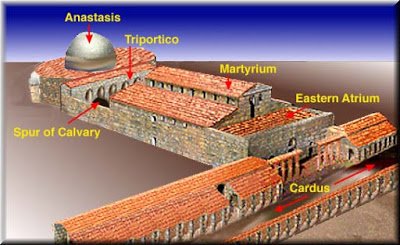
On Monday, the following day, they carry out in the Anastasis (rotunda built on site assumed to be Christ’s tomb) whatever ceremonies are customarily performed from the first cockcrow until dawn, as well as whatever is done at the third and sixth hours throughout Lent. However, at the ninth hour everyone comes together in the major church or Martyrium, and until the first hour of the night they continually sing hymns and antiphons, and read passages from the Scriptures fitting to the day and the place, always interrupting them with prayers. Vespers is celebrated in the Martyraim, when the hour for it is at hand. The results is that it is already night when the dismissal is given at the Martyrium. As soon as the dismissal has been given, the bishop is led from there to the Anastasis to the accompaniment of hymns. When he has entered the Anastasis, a hymn is sung, a prayer is said, first the catechumens and then the faithful are blessed, and finally the dismissal is given.
 The Barefoot Evangelist
Leave a comment