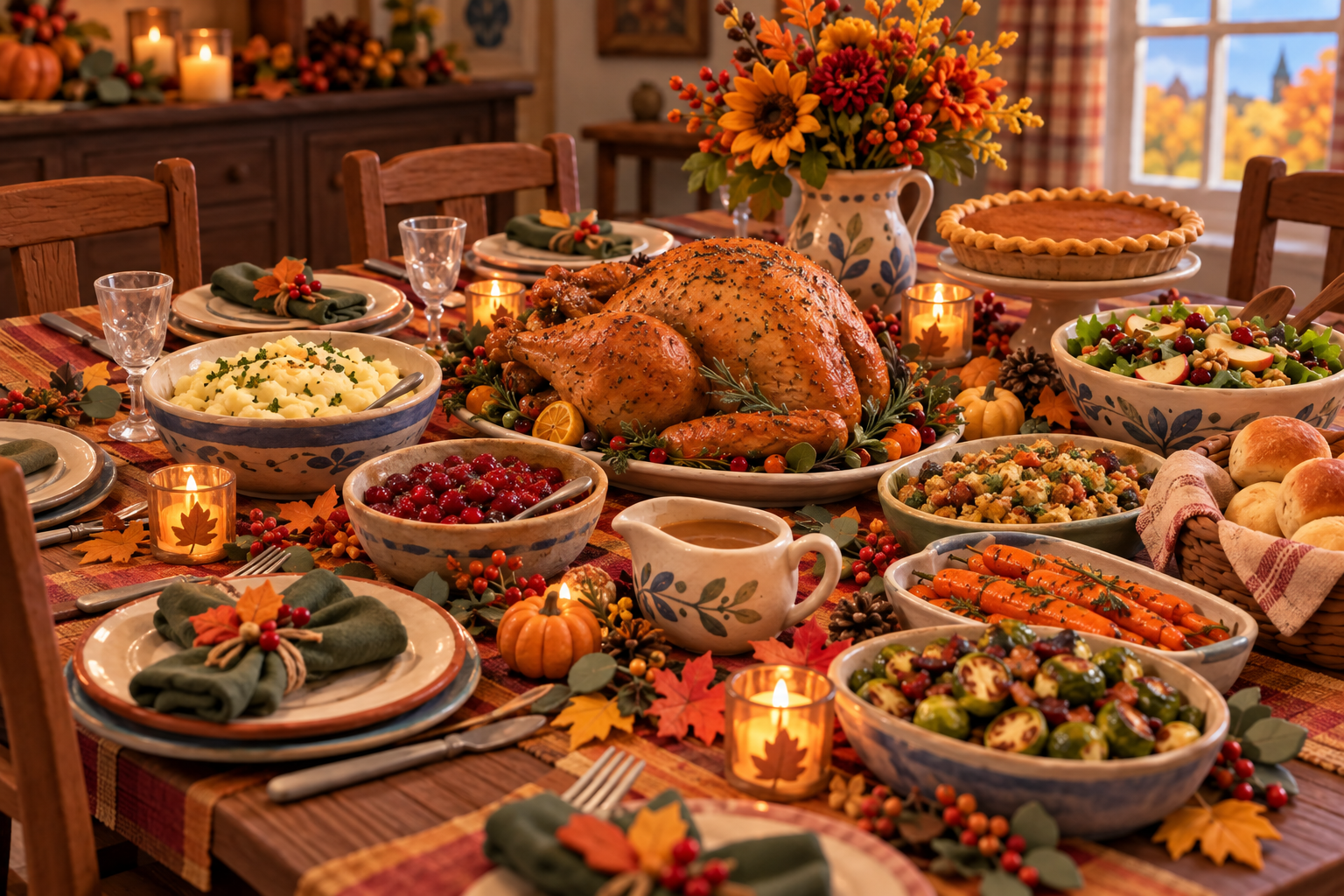
It is Thanksgiving in Canada this coming Monday, and the holiday has a way of arriving with expectations.
There should be turkey, of course. Potatoes prepared the right way. Enough vegetables to satisfy everyone at the table. Pie. Cranberry sauce. Family traditions. And somewhere along the way, we can begin to act as though gratitude itself depends upon getting all those pieces into their proper places.
But gratitude has never required a perfect table.
In biblical stories, thanksgiving is often offered in circumstances that are decidedly imperfect. People give thanks in wilderness places. They remember God’s faithfulness when the future remains uncertain. They celebrate harvests while knowing another winter is coming.
Biblical gratitude isn’t pretending everything is wonderful. It is the practice of noticing what is good while life is still complicated. That distinction matters.
For some people, Thanksgiving will mean a crowded table and too much food. For others, there will be an empty chair. Some families will laugh until somebody snorts. Others will carefully avoid the subject everyone knows not to mention. Some people will celebrate with family, some with friends, and some will spend much of the weekend alone.
None of those circumstances disqualifies us from gratitude.
Gratitude asks a much smaller question:
What is here that is worth noticing?
Maybe it is the person who showed up.
The meal somebody bothered to make.
A friendship that survived a difficult year.
A body that carried you farther than you thought it could.
Work that mattered.
A child growing into themselves.
A second chance.
A moment of beauty you almost walked past.
Or simply enough for today.
Thanksgiving can become an invitation to pay attention – to recognize the ordinary abundance that is remarkably easy to miss while we’re busy worrying about what isn’t finished, isn’t fixed, or hasn’t happened yet.
This week, I’ve put together a Thanksgiving workbook to help children and families explore gratitude, Thanksgiving, and the biblical tradition of giving thanks together.
Use it around the kitchen table, tuck it into a church activity bag, send it home with Sunday-school families, or let the kids work on it while the grown-ups negotiate oven space.
And sometime during the weekend, perhaps we can all stop long enough to notice what is good, and give thanks for that.


Leave a Reply