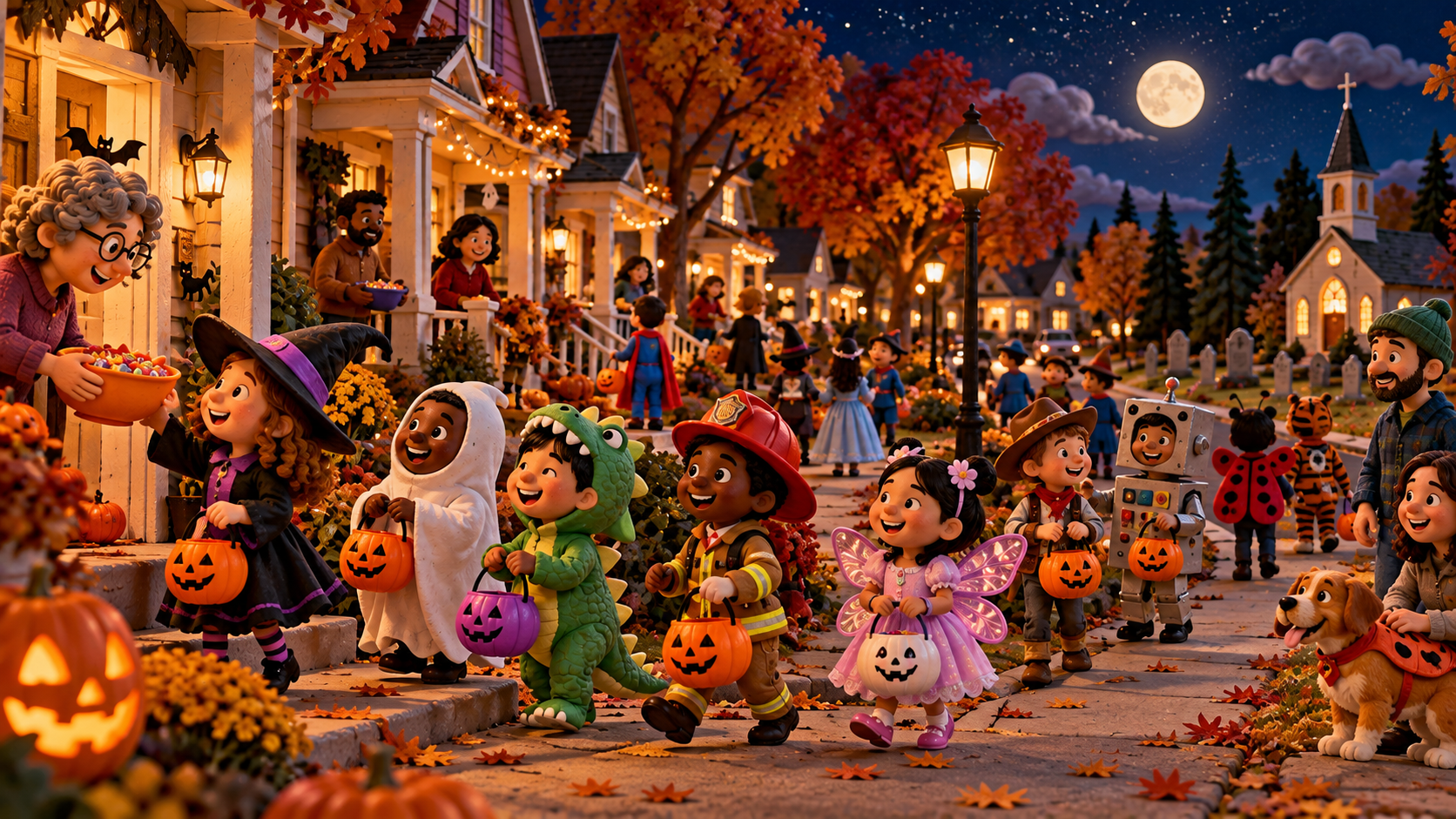
Every October, Halloween brings out the pumpkins, costumes, candy, and ghost stories. For many Christians, it’s simply a delightful occasion for children, families, and neighbourhoods to have some fun. Others regard it with suspicion, concerned about its associations with witches, spirits, and the supernatural. But Halloween has a much richer history than either the candy aisle or the annual arguments about its supposed dangers might suggest.
Part of that history reaches back to Samhain, a Gaelic festival marking the transition from harvest into winter. In Irish tradition, this seasonal turning point was associated with the Otherworld and encounters with supernatural beings. That doesn’t mean Samhain was simply a festival of the dead, nor that everything we do at Halloween originated there. Our modern celebration has developed through centuries of overlapping customs, beliefs, and cultural changes.
Christianity contributed its own traditions. Halloween takes its name from All Hallows’ Eve, the evening before All Saints’ Day on November 1. All Souls’ Day follows on November 2. These observances make room in the Christian calendar to remember the saints, honour those who have died, and recognize the enduring bonds of faith and love. The relationship between these Christian commemorations and older seasonal customs is complex, but remembering the dead has never been foreign to Christianity.
Nor has confronting death through imagery. Medieval churches contained tombs, memorials, and sometimes even displays of human bones. Christian art depicted the danse macabre, in which Death leads kings, peasants, clergy, and children into the same dance. Such images reminded people that mortality comes for everyone. They could be unsettling, certainly, but they were also invitations to reflect on how we live.
Human beings have also found creative ways to deal with frightening things. Across cultures, masks, costumes, stories, and rituals have allowed people to confront, impersonate, challenge, and sometimes laugh at what scares them. A child dressed as a skeleton or a ghost isn’t necessarily celebrating evil. Sometimes the frightening becomes a little less powerful when we can dress it up, give it a ridiculous face, and send it looking for chocolate.
Perhaps modern society is less comfortable with death than many of the Christians who came before us. We happily watch fictional monsters on television, yet often struggle to speak openly about dying, grief, and the physical realities of death. We may prefer to keep mortality at a comfortable distance, even while decorating our front lawns with plastic skeletons. Halloween offers an unexpected opportunity to ask why.
Christian faith does not require us to pretend that death isn’t frightening or that grief doesn’t hurt. At the heart of Christianity is the story of Jesus’ death and resurrection, and the conviction that death does not have the final word. Paul even challenges death directly: “Where, O death, is your victory? Where, O death, is your sting?” (1 Corinthians 15:55). There is something wonderfully defiant about that question, and perhaps even a little room for laughter.
So enjoy the costumes, carve the pumpkins, welcome the neighbourhood children, and share the candy. Remember, too, that Halloween belongs to a much larger human story of changing seasons, imagination, community, remembrance, and hope. If you’d like to explore its history and Christian connections further, our Barefoot Evangelist Halloween workbook: Who Invented Halloween? offers an opportunity to look beyond the familiar decorations and discover the traditions and questions behind them.


Leave a Reply