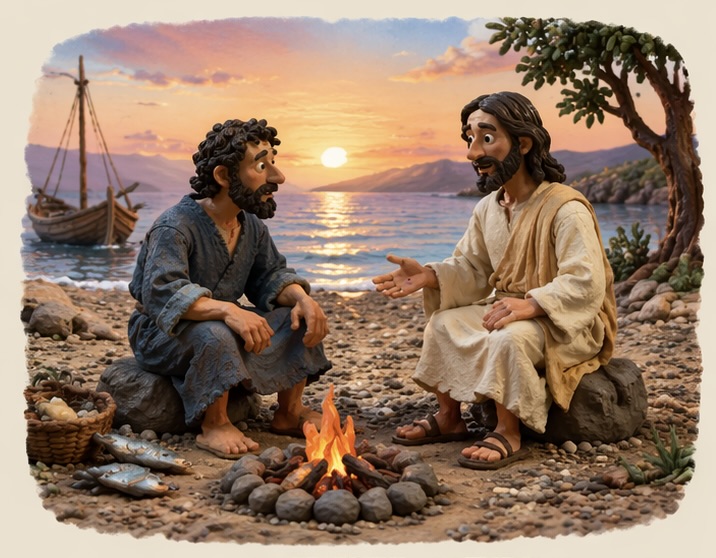
Peter’s story after the resurrection isn’t about perfection; it’s about restoration. After failure, denial, and uncertainty, Jesus meets him on the shore and calls him back into mission. Leadership, then, is born not from flawless performance but from mercy, restoration, and the courage to rise again.
Our lives are full of moments when we stumble, fall short, or feel inadequate. Peter reminds us that failure doesn’t disqualify us; it humanizes us. Leadership, influence, and responsibility are offered not because we are perfect, but because we are willing to return, to listen, and to act with renewed purpose.
Mercy isn’t abstract – it’s practical. It shows up in encouragement, mentorship, second chances, and the humility to lead with empathy. The shore, with its simplicity, waves, and labor of fishing, becomes the place of transformation – a reminder that leadership is an act of restoration, not self-aggrandizement.
This week, consider where restoration and mercy might shape your leadership. Where can you step forward despite failure, embrace second chances, and lead by example in your own small or large spheres of influence?


Leave a comment