Holy Week 2025 – Monday

When human power structures refuse to accept the authority of God’s people

 

Luke 19 45 When Jesus entered the temple, he started chasing out the people who were selling things. 46  He told them, “The Scriptures say, ‘My house should be a place of worship.’ But you have made it a place where robbers hide!”

47  Each day, Jesus kept on teaching in the temple. So the chief priests, the teachers of the Law of Moses, and some other important people tried to have him killed. 48 But they could not find a way to do it, because everyone else was eager to listen to him.

20 One day, Jesus was teaching in the temple and telling the good news. So the chief priests, the teachers, and the nation’s leaders asked him, “What right do you have to do these things? Who gave you this authority?”

Jesus replied, “I want to ask you a question. Who gave John the right to baptize? Was it God in heaven or merely some human being?”

They talked this over and said to each other, “We can’t say God gave John this right. Jesus will ask us why we didn’t believe John. And we can’t say it was merely some human who gave John the right to baptize. The crowd will stone us to death, because they think John was a prophet.”

So they told Jesus, “We don’t know who gave John the right to baptize.”

Jesus replied, “Then I won’t tell you who gave me the right to do what I do.”


Prayer


from origen (184-253 CE)

Let us pray, however, the mercy of the omnipotent God to make us not only hearers of the word, but also doers and to bring upon our souls also a flood of God’s water and destroy in us what God knows should be destroyed, and encourage what God knows should be encouraged, through Christ our Lord and through the Holy Spirit. To God be glory forever and ever. Amen.


Egeria in the Holy land, c. 380 CE

Egeria was a nun from France who was touring the Holy Land in the late 4th century. She was in Jerusalem during Holy Week and provides the only eye witness account of how the early church celebrated.

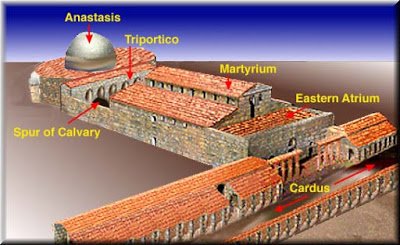
On Monday, the following day, they carry out in the Anastasis (rotunda built on site assumed to be Christ’s tomb) whatever ceremonies are customarily performed from the first cockcrow until dawn, as well as whatever is done at the third and sixth hours throughout Lent. However, at the ninth hour everyone comes together in the major church or Martyrium, and until the first hour of the night they continually sing hymns and antiphons, and read passages from the Scriptures fitting to the day and the place, always interrupting them with prayers. Vespers is celebrated in the Martyraim, when the hour for it is at hand. The results is that it is already night when the dismissal is given at the Martyrium. As soon as the dismissal has been given, the bishop is led from there to the Anastasis to the accompaniment of hymns. When he has entered the Anastasis, a hymn is sung, a prayer is said, first the catechumens and then the faithful are blessed, and finally the dismissal is given.

Sunday Reflection – Palm Sunday, April 13, 2025

Hosanna

Luke 19 28 When Jesus had finished saying all this, he went on toward Jerusalem. 29 As he was getting near Bethphage and Bethany on the Mount of Olives, he sent two of his disciples on ahead. 30 He told them, “Go into the next village, where you will find a young donkey that has never been ridden. Untie the donkey and bring it here. 31 If anyone asks why you are doing this, just say, ‘The Lord needs it.’ ”

32 They went off and found everything just as Jesus had said. 33 While they were untying the donkey, its owners asked, “Why are you doing that?”

34 They answered, “The Lord needs it.”

35 Then they led the donkey to Jesus. They put some of their clothes on its back and helped Jesus get on. 36 And as he rode along, the people spread clothes on the road in front of him. 37 When Jesus started down the Mount of Olives, his large crowd of disciples were happy and praised God because of all the miracles they had seen. 38  They shouted,

“Blessed is the king who comes
    in the name of the Lord!
Peace in heaven
    and glory to God.”

39 Some Pharisees in the crowd said to Jesus, “Teacher, make your disciples stop shouting!”

40 But Jesus answered, “If they keep quiet, these stones will start shouting.”

Kids Korner: Palms and parades (April 13th)

Read Luke 19:28-40 with your family.

When people are excited everyone can feel it. That was what it was like when Jesus entered Jerusalem.

For years old people had been telling young people about the promise of a saviour, of a person who would come and free them from the Romans, and make Jerusalem and all the lands ruled by the Hebrews again. They were all waiting.

And they all believed Jesus was that saviour.

The thing is, Jesus was coming to make a different world for them, just not to get rid of the Romans like they hoped. Jesus came to teach them how to live God’s way. That is exciting for all of us.

Lenten Study 2025 – Week 5

Unlike past Lenten Studies, this year we are not looking at specific Biblical characters or working through books of the Bible. This year we are taking a survey approach to finding hope in scripture, and getting some pragmatic examples of how to be God’s people, bringing justice through our actions.

Our world is different in 2025, especially those of us who are Canadian and find our borders threatened by our oldest political neighbour. These are uncertain times, and so many who want to support fascism are claiming to represent the Biblical narrative. They are not. 

This study will work its way through various books of the Hebrew and Christian scriptures, then look at historical figures who lived the faith of peace, justice and equity through our 2000 years of history.

Week 5

Social Justice

Lenten Study 2025 – Week 4

Unlike past Lenten Studies, this year we are not looking at specific Biblical characters or working through books of the Bible. This year we are taking a survey approach to finding hope in scripture, and getting some pragmatic examples of how to be God’s people, bringing justice through our actions.

Our world is different in 2025, especially those of us who are Canadian and find our borders threatened by our oldest political neighbour. These are uncertain times, and so many who want to support fascism are claiming to represent the Biblical narrative. They are not. 

This study will work its way through various books of the Hebrew and Christian scriptures, then look at historical figures who lived the faith of peace, justice and equity through our 2000 years of history.

Week 4

Do unto others

Sunday Reflection – Lent IV, March 30, 2025

Two lost sons

Luke 15 Tax collectors and sinners were all crowding around to listen to Jesus. So the Pharisees and the teachers of the Law of Moses started grumbling, “This man is friendly with sinners. He even eats with them.”

Then Jesus told them this story:

11 Jesus told them yet another story:

Once a man had two sons. 12 The younger son said to his father, “Give me my share of the property.” So the father divided his property between his two sons.

13 Not long after that, the younger son packed up everything he owned and left for a foreign country, where he wasted all his money in wild living. 14 He had spent everything, when a bad famine spread through that whole land. Soon he had nothing to eat.

15 He went to work for a man in that country, and the man sent him out to take care of his pigs. 16 He would have been glad to eat what the pigs were eating, but no one gave him a thing.

17 Finally, he came to his senses and said, “My father’s workers have plenty to eat, and here I am, starving to death! 18 I will go to my father and say to him, ‘Father, I have sinned against God in heaven and against you. 19 I am no longer good enough to be called your son. Treat me like one of your workers.’ ”

20 The younger son got up and started back to his father. But when he was still a long way off, his father saw him and felt sorry for him. He ran to his son and hugged and kissed him.

21 The son said, “Father, I have sinned against God in heaven and against you. I am no longer good enough to be called your son.”

22 But his father said to the servants, “Hurry and bring the best clothes and put them on him. Give him a ring for his finger and sandals for his feet. 23 Get the best calf and prepare it, so we can eat and celebrate. 24 This son of mine was dead, but has now come back to life. He was lost and has now been found.” And they began to celebrate.

25 The older son had been out in the field. But when he came near the house, he heard the music and dancing. 26 So he called one of the servants over and asked, “What’s going on here?”

27 The servant answered, “Your brother has come home safe and sound, and your father ordered us to kill the best calf.” 28 The older brother got so angry that he would not even go into the house.

His father came out and begged him to go in. 29 But he said to his father, “For years I have worked for you like a slave and have always obeyed you. But you have never even given me a little goat, so that I could give a dinner for my friends. 30 This other son of yours wasted your money on prostitutes. And now that he has come home, you ordered the best calf to be killed for a feast.”

31 His father replied, “My son, you are always with me, and everything I have is yours. 32 But we should be glad and celebrate! Your brother was dead, but he is now alive. He was lost and has now been found.”

Kids Korner: Lost sons (March 30th)

Read Luke 15:11-32 with your family.

When we read this story about the lost son, so many focus on the younger son who realized he made a mistake by leaving his father’s home, and returned asking for some basic help, but instead found himself treated like a returning prince. We do not spend much time looking at the older brother outside of thinking he is selfish for not wanting to celebrate and share with his brother.

But what happens when we realize that both sons were lost?

We know how the younger son was lost, but what about the older son? He did not see his place in his father’s house as special simply because his father did not celebrate him in the same way. But his father DID celebrate him.

The older son did not understand that what he received from his father was always there and always would be. They shared trust and were together for all the good times and bad times. The oldest son was reliable and had his father’s trust. The father celebrated his older son every day in countless ways, big and small.

Sometimes we only see the big parties but not the every day events that celebrate us. Try to see those every day things. They add up and show us how special we are all the time.

Lenten Study 2025 – Week 3

Unlike past Lenten Studies, this year we are not looking at specific Biblical characters or working through books of the Bible. This year we are taking a survey approach to finding hope in scripture, and getting some pragmatic examples of how to be God’s people, bringing justice through our actions.

Our world is different in 2025, especially those of us who are Canadian and find our borders threatened by our oldest political neighbour. These are uncertain times, and so many who want to support fascism are claiming to represent the Biblical narrative. They are not. 

This study will work its way through various books of the Hebrew and Christian scriptures, then look at historical figures who lived the faith of peace, justice and equity through our 2000 years of history.

Week 3

Faith into Action

Sunday Reflection – Lent III, March 23, 2025

One More Chance

Luke 13 About this same time Jesus was told that Pilate had given orders for some people from Galilee to be killed while they were offering sacrifices. Jesus replied:

Do you think that these people were worse sinners than everyone else in Galilee just because of what happened to them? Not at all! But you can be sure that if you don’t turn back to God, every one of you will also be killed. What about those 18 people who died when the tower in Siloam fell on them? Do you think they were worse than everyone else in Jerusalem? Not at all! But you can be sure that if you don’t turn back to God, every one of you will also die.

Jesus then told them this story:

A man had a fig tree growing in his vineyard. One day he went out to pick some figs, but he didn’t find any. So he said to the gardener, “For three years I have come looking for figs on this tree, and I haven’t found any yet. Chop it down! Why should it take up space?”

The gardener answered, “Master, leave it for another year. I’ll dig around it and put some manure on it to make it grow. Maybe it will have figs on it next year. If it doesn’t, you can have it cut down.”

Kids Korner: One more chance (March 23rd)

Read Luke 13:1-9 with your family.

Often when Jesus is asked a question he does not answer it. Or when he does answer he is talking about something different from the original question.

In this story we hear about 18 people crushed when a stone tower collapsed. We do not know anything about this tower or where it might have been, but there is a Pool of Siloam south of the Temple where people gathered when they first came to visit Jerusalem. People who wanted to visit the temple would first go to the Pool of Siloam to wash themselves because they had to be clean going into the Temple. So maybe the Tower of Siloam was beside that pool, and when it collapsed the people killed would have been on their way to pray.

So the question asked is: were those people killed by the tower worse people than the rest of us so the tower collapsed on them as a special punishment by God?

Jesus did not answer that question. Instead he told them we all have to improve our behaviour and make better choices.

Bad things happen to good people and bad people, and we have no way to prepare for that. But poor behaviour does mean that we are not helping to make this world a good place for everyone. And poor behaviour is a choice.