
In this episode, Debb and Deb discuss conservation, ecology, and the spiritual implications of our choices when protecting our planet’s environment.
In this episode, Debb and Deb discuss conservation, ecology, and the spiritual implications of our choices when protecting our planet’s environment.
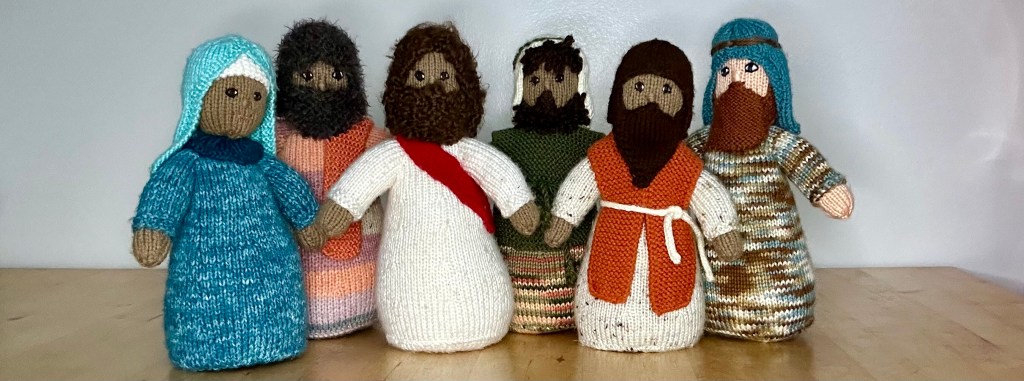
Who do you say Jesus is?
Mark 8 27 Jesus and his disciples went to the villages near the town of Caesarea Philippi. As they were walking along, he asked them, “What do people say about me?”
28 The disciples answered, “Some say you are John the Baptist or maybe Elijah.Others say you are one of the prophets.”
29 Then Jesus asked, “But who do you say I am?”
“You are the Messiah!” Peter replied.
30 Jesus warned the disciples not to tell anyone about him.
31 Jesus began telling his disciples what would happen to him. He said, “The nation’s leaders, the chief priests, and the teachers of the Law of Moses will make the Son of Man suffer terribly. He will be rejected and killed, but three days later he will rise to life.” 32 Then Jesus explained clearly what he meant.
Peter took Jesus aside and told him to stop talking like that. 33 But when Jesus turned and saw the disciples, he corrected Peter. He said to him, “Satan, get away from me! You are thinking like everyone else and not like God.”
34 Jesus then told the crowd and the disciples to come closer, and he said: If any of you want to be my followers, you must forget about yourself. You must take up your cross and follow me. 35 If you want to save your life, you will destroy it. But if you give up your life for me and for the good news, you will save it. 36 What will you gain, if you own the whole world but destroy yourself? 37 What could you give to get back your soul?
38 Don’t be ashamed of me and my message among these unfaithful and sinful people! If you are, the Son of Man will be ashamed of you when he comes in the glory of his Father with the holy angels.
Read Mark 8:27-38 with your family.
Jesus had very good friends, but those friends did not always understand what Jesus was doing or why he had to challenge the religious authorities in the Temple in Jerusalem. They wanted Jesus to stay with them so they could continue enjoying his company as they travelled around meeting, teaching, and healing people.
However, Jesus had a job to do. A hard job. And Jesus wanted us to share a part of that hard job.
His disciples didn’t understand. Peter tried to tell him not to risk his life, but Jesus got upset and told Peter to get behind him and don’t be a temptation to an easier way of life (this was not about the character of Satan that we have in today’s movies and scary shows, all ‘satan’ meant was temptation to follow a different path than the one God wanted us to follow).
Then Jesus said “take up your cross”, but that didn’t mean real cross like the one on which Jesus would die, instead it meant take up your responsibility to make the world a better place, even when people get angry at you and say or do mean things.
Following Jesus is not easy, but if we do behave as Jesus asked us to behave, and treat everyone with love and kindness, we get to help change the world into what it was supposed to be. That’s what Jesus meant by asking us to make some harder choices. We might not get what we want right away, but we can experience the beauty of God’s world if we all work together to make things better.

Healing and helping
Mark 7 24 Jesus left and went to the region near the town of Tyre, where he stayed in someone’s home. He did not want people to know he was there, but they found out anyway. 25 A woman whose daughter had an evil spirit in her heard where Jesus was. And at once she came and knelt down at his feet. 26 The woman was Greek and had been born in the part of Syria known as Phoenicia. She begged Jesus to force the demon out of her daughter. 27 But Jesus said, “The children must first be fed! It isn’t right to take away their food and feed it to dogs.”
28 The woman replied, “Lord, even puppies eat the crumbs that children drop from the table.”
29 Jesus answered, “That’s true! You may go now. The demon has left your daughter.” 30 When the woman got back home, she found her child lying on the bed. The demon had gone.
31 Jesus left the region around Tyre and went by way of Sidon toward Lake Galilee. He went through the land near the ten cities known as Decapolis. 32 Some people brought to him a man who was deaf and could hardly talk. They begged Jesus just to touch him.
33 After Jesus had taken him aside from the crowd, he stuck his fingers in the man’s ears. Then he spit and put it on the man’s tongue. 34 Jesus looked up toward heaven, and with a groan he said, “Effatha!” which means “Open up!” 35 At once the man could hear, and he had no more trouble talking clearly.
36 Jesus told the people not to say anything about what he had done. But the more he told them, the more they talked about it. 37 They were completely amazed and said, “Everything he does is good! He even heals people who cannot hear or talk.”
Read Mark 7:24-37 with your family.
Have you ever had someone say they were too tired to spend time with you? Jesus felt that way too. He was tired and just wanted to rest for a bit. But the people wanted Jesus, they wanted to learn from him and have his help. And they also reminded Jesus that they mattered.
It’s easy to think that going to church is the best place to feel God in our lives, but this story reminds us that most of the time we feel God outside of church. We see God in people who need our help. We learn about God from people who challenge us.
And we find God even when we are tired and just want to be alone.
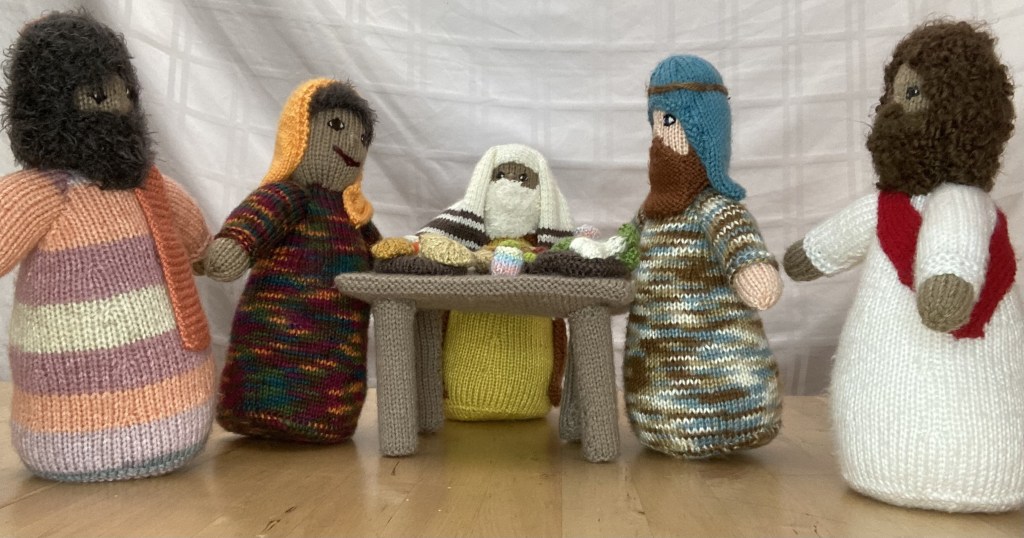
Tradition vs. God’s expectations
Mark 7 Some Pharisees and several teachers of the Law of Moses from Jerusalem came and gathered around Jesus. 2 They noticed that some of his disciples ate without first washing their hands.
3 The Pharisees and many others obey the teachings of their ancestors. They always wash their hands in the proper way before eating. 4 None of them will eat anything they buy in the market until it is washed. They also follow a lot of other teachings, such as washing cups, pitchers, and bowls.
5 The Pharisees and teachers asked Jesus, “Why don’t your disciples obey what our ancestors taught us to do? Why do they eat without washing their hands?”
6 Jesus replied:
You are nothing but show-offs! The prophet Isaiah was right when he wrote that God had said,
“All of you praise me
with your words,
but you never really
think about me.
7 It is useless for you
to worship me,
when you teach rules
made up by humans.”
8 You disobey God’s commands in order to obey what humans have taught.
14 Jesus called the crowd together again and said, “Pay attention and try to understand what I mean. 15 The food that you put into your mouth doesn’t make you unclean and unfit to worship God.”
21 Out of your heart come evil thoughts, vulgar deeds, stealing, murder, 22 unfaithfulness in marriage, greed, meanness, deceit, indecency, envy, insults, pride, and foolishness. 23 All of these come from your heart, and they are what make you unfit to worship God.
Read Mark 7:1-8, 14-15, 21-23 with your family.
People have a lot of ideas about how we are supposed to behave as religious people. Dress nice. Be kind even when people are hurting us. Never say bad words. Do what the adults say even when it doesn’t make sense.
But Jesus never told us to do any of that.
In this story we are reminded that all of those rules were created by other people, not by God. God only asked us to love each other and take care of each other.
There are two kinds of rules: those that make the world better for others, and those meant to control other people. The church and many adults usually put too much attention on the rules of control and forget the rules of God.
God wants us to take care of each other, so some of God’s rules are: don’t hurt people, feed people when they are hungry, make people feel better when they are sad, and make sure people have safe places to live.
God’s rules are not about control. God’s rules are about loving our neighbours.
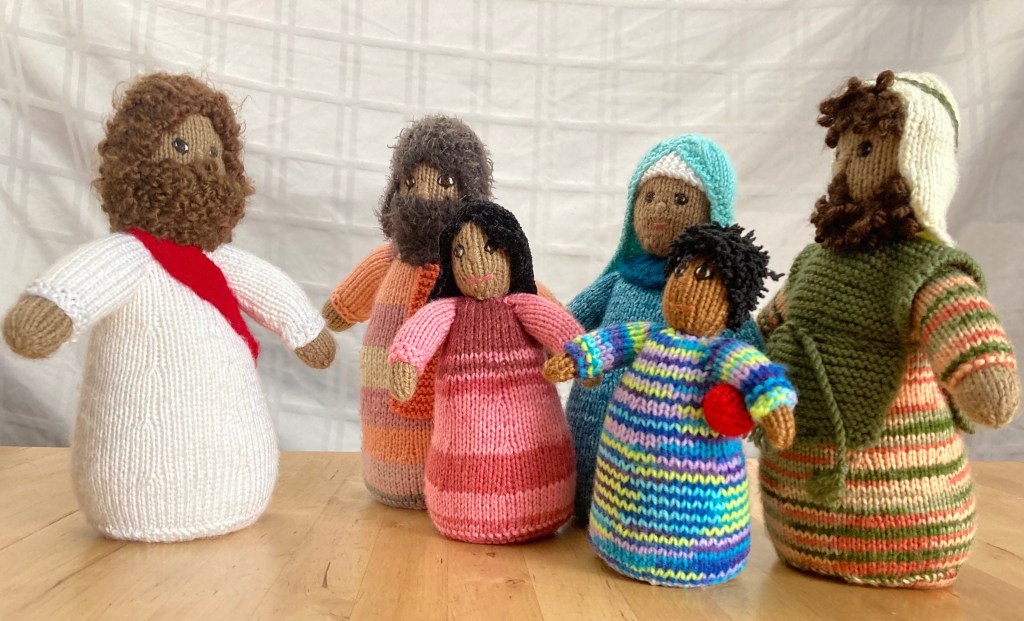
Where else could we go?
John 6 56 If you eat my flesh and drink my blood, you are one with me, and I am one with you.
57 The living Father sent me, and I have life because of him. Now everyone who eats my flesh will live because of me. 58 The bread that comes down from heaven isn’t like what your ancestors ate. They died, but whoever eats this bread will live forever.
59 Jesus was teaching in a synagogue in Capernaum when he said these things.
60 Many of Jesus’ disciples heard him and said, “This is too hard for anyone to understand.”
61 Jesus knew that his disciples were grumbling. So he asked, “Does this bother you? 62 What if you should see the Son of Man go up to heaven where he came from? 63 The Spirit is the one who gives life! Human strength can do nothing. The words that I have spoken to you are from that life-giving Spirit. 64 But some of you refuse to have faith in me.” Jesus said this, because from the beginning he knew who would have faith in him. He also knew which one would betray him.
65 Then Jesus said, “You cannot come to me, unless the Father makes you want to come. That is why I have told these things to all of you.”
66 Because of what Jesus said, many of his disciples turned their backs on him and stopped following him. 67 Jesus then asked his twelve disciples if they also were going to leave him. 68 Simon Peter answered, “Lord, there is no one else that we can go to! Your words give eternal life. 69 We have faith in you, and we are sure that you are God’s Holy One.”
Read John 6:56-69 with your family.
Today we like to think that everyone loved Jesus back in the Bible times, and everyone believed what he had to say, and everyone understood, or mostly understood, what Jesus was teaching them. But that is not the case. Some people did not like what Jesus had to say at all.
We know that those who worked at the Temple had a problem with what Jesus was teaching, but regular people did too.
We teach children that Jesus’ message was to love everyone, and that is true. Love is easy to understand when you are young.
But for grown-ups, it is a little harder. They wanted more answers and didn’t always like what Jesus had to say about changing their own lifestyles to make the world better. They wanted easy answers and didn’t always realize that the easiest thing to think about could sometimes be the hardest thing to put into action.
In order for everyone to have enough, those who have too much have to give that up, and they didn’t want to.
Jesus understood this. That was why he let people go. If you want to follow Jesus, that is a choice we all have to make. And following Jesus is sometimes very hard.
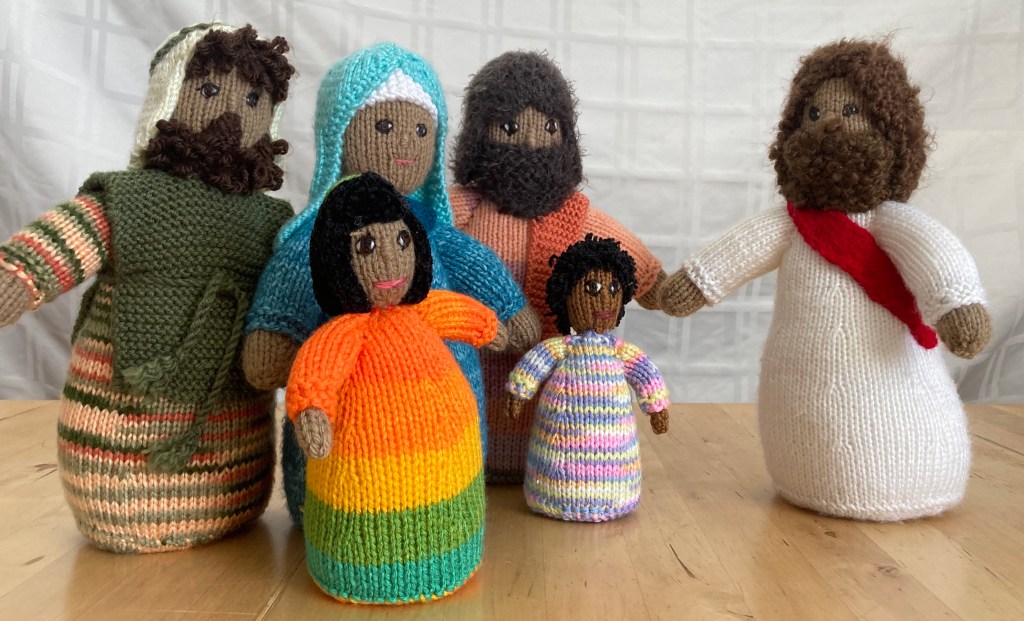
My body, my blood
John 6 51 I am that bread from heaven! Everyone who eats it will live forever. My flesh is the life-giving bread I give to the people of this world.
52 They started arguing with each other and asked, “How can he give us his flesh to eat?”
53 Jesus answered:
I tell you for certain that you won’t live unless you eat the flesh and drink the blood of the Son of Man. 54 But if you do eat my flesh and drink my blood, you will have eternal life, and I will raise you to life on the last day. 55 My flesh is the true food, and my blood is the true drink. 56 If you eat my flesh and drink my blood, you are one with me, and I am one with you.
57 The living Father sent me, and I have life because of him. Now everyone who eats my flesh will live because of me. 58 The bread that comes down from heaven isn’t like what your ancestors ate. They died, but whoever eats this bread will live forever.
 The Barefoot Evangelist