Kids Korner: It will be different in Heaven (November 9th)

Read Luke 20:27-40 with your family.

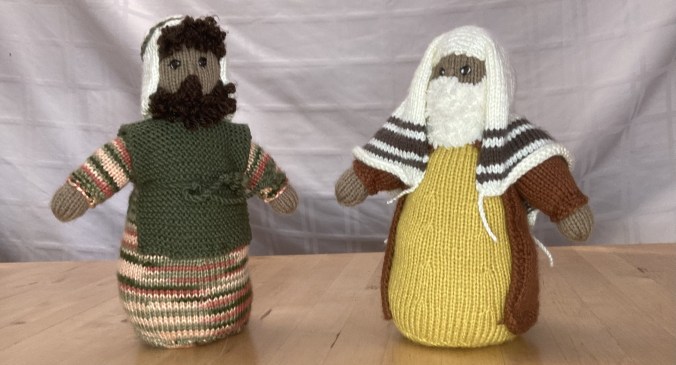
In the Hebrew tradition at the time when Jesus was alive and teaching 2000 years ago, there were three groups of people, three different ways of understanding what they believed. The Essenes who had a lot in common with Jesus’ followers, the Pharisees who were regular folks and challenged Jesus all the time, and the Sadducees who were from rich families and did not agree with Jesus’ teachings about God at all.

Our story today tells about a time the Sadducees challenged Jesus about a new life after death. The Essenes and Pharisees agreed with Jesus that there was something more after you died. The Sadducees did not believe in life after death. So the Sadducees tried to set Jesus up.

But once again, Jesus was ready for the Sadducees and told them that life after death looking a lot different than the life they were living.

In life after death, what we often call Heaven, everyone is alive in God and free to love each other without all the rules that divide people of this life.


Being grounded in the Gospel message

I get a lot of comments on the name I have chosen for this website. A few weeks ago I went over why I chose evangelist and barefoot, but the comments keep coming. The online ones focus on “evangelist”, and given the all too frequent negative use of that term, I am not the least bit surprised.

In real life, however, it’s the ‘barefoot’ part of worship leadership that keeps getting people’s attention. That is especially true as the weather turns colder here in Canada. Aren’t you cold, I’m asked on a regular basis. Yes… yes I am, to tell you the truth. Especially when I step outside of church after service on to the cold stones or concrete. I don’t feel it when I’m leading worship – I move around too much – but I feel it when I stop.

There is a long line of Canadian women who felt more comfortable, more approachable by performing barefoot. Women like Anne Murray, Rita MacNeil and k.d. lang all performed barefoot, and if anyone was asked today what they remember about any of these women’s performances, it would probably be that they felt real.

Although the barefoot part gets attention when I’m leading worship, I don’t do it for that purpose. It’s a fun ice breaker, arguably, but this preference tells a larger truth – my desire to be grounded in what I am doing and saying.

Making the Gospel feel real to folks living 2000 years after the writers wrote it and the people lived it, is no easy task. The differences in cultural context alone make things confusing, and reading any of the Bible thinking it all makes sense dropped into our modern culture is a recipe for disaster, no matter who tries to do it that way.

One thing we can count on once cultural and historical context is explained, is the through line of social justice. The early church was never meant to be a religion. The earliest followers of Jesus were quite at home in their Hebrew tradition, they just saw where adjustments and changes needed to happen. Their focus was not on creating structure – that came later with Rome’s take over of the faith – the focus of the first centuries was on making life better and equal for everyone.

When we read the words of the Magnificat, we have to recognize how powerful it is to hear that the powerful are brought down and the weak are raised up. There is no changing places as so many in power fear, there is merely an equaling of places in society.

By grounding ourselves in the Gospel, we can see where change needs to happen. It helps us avoid the superficiality of salvation-behaviour encouraged in so many places, and it allows us to focus on the social Gospel that Jesus preached. Change, inclusion, social equality, mutual dependence, shared abundance… those are all Gospel ideals.

Sunday Reflection – All Souls’ Day, Sunday, November 2, 2025

Redemption and change

Luke 19 Jesus was going through Jericho, where a man named Zacchaeus lived. He was in charge of collecting taxes and was very rich. 3-4 Jesus was heading his way, and Zacchaeus wanted to see what he was like. But Zacchaeus was a short man and could not see over the crowd. So he ran ahead and climbed up into a sycamore tree.

When Jesus got there, he looked up and said, “Zacchaeus, hurry down! I want to stay with you today.” Zacchaeus hurried down and gladly welcomed Jesus.

Everyone who saw this started grumbling, “This man Zacchaeus is a sinner! And Jesus is going home to eat with him.”

Later that day Zacchaeus stood up and said to the Lord, “I will give half of my property to the poor. And I will now pay back four times as much to everyone I have ever cheated.”

Jesus said to Zacchaeus, “Today you and your family have been saved, because you are a true son of Abraham. 10  The Son of Man came to look for and to save people who are lost.”

Kids Korner: Zacchaeus & Jesus (November 2nd)

Read Luke 19:1-10 with your family.

To help remember this story there is a children’s song that you can find here on YouTube.

This is one of the last stories before Jesus enters Jerusalem for the final time. Jesus had been leading his followers for over three years at this point, and his reputation was big. Everyone in Galilee and Judea had heard about him and wanted to see him, including the local tax collector, a man named Zacchaeus.

Zacchaeus was not liked because as a tax collector he worked for the Roman government, and the Roman government allowed Zacchaeus to take extra money off the top to keep for himself, so he became very rich. All of that extra money came from the people who lived in Jericho, so Zacchaeus was not liked.

To call him a “sinner” meant that he had a broken relationship with either God or the people around him, or both.

When Jesus picked Zacchaeus to be his host, the people were very angry. But the people did not know that Zacchaeus wanted to change, and Jesus wanted to help Zacchaeus change.

Zacchaeus promised to give half of what he owed back to the people, and to never take extra money from taxes again. Zacchaeus was trying to repair his relationship with both God and the people. That is what Jesus knew, and that is why Zacchaeus was picked to host Jesus.

The people would learn about this change eventually, but while Jesus was there, they were just jealous that Zacchaeus had extra time with Jesus.

Sometimes we do not understand why some people get extra attention and we do not. It hurts. We want to be special too. But what we might not know is that the person who gets extra attention needs to have that attention in order to make something better. We cannot judge what is happening for someone else, we only have to make the best choices for ourselves and be kind, the way God asked us to be.

Meditating when your mind and body won’t sit still

I recently had a conversation with someone about an issue they were having. I suggested they “meditate” on it, and their response was to say “Yes, I’ll think about it”. I quickly corrected them by pointing out I said meditate – as in let your mind wander & ponder.

I am not always great about taking my own advice.

Meditation, as I told the person I was talking to, should be a passive experience. Those leading meditations often say just to let the thoughts float free. However, when those thoughts carry you with them, the entire process can be an act of frustration.

I find the idea of meditation rewarding and beneficial, but I am not one to sit still for any length of time. I squirm, I shift, I roll my shoulders, and I am always opening my eyes. It is hard, even though I know it could be a valuable part of my spiritual practice.

Most of us have the list of assumed ‘holy’ behaviours: pray regularly, read the Bible, listen to or read commentaries by others who have deep thoughts on those Biblical passages, participate in eucharist/communion, say kind things, and learn to sit quietly with God.

For some of us, sitting quietly is anything but quiet. We might get a few seconds, perhaps even a few minutes, but before long the world around us is distracting us from our efforts.

Given this experience, I have embraced the idea of walking meditation, and it bears little resemblance to the scripted ‘walking meditations’ one can find online.

Walking in body is often mirrored by ‘walking’ in the mind. As your body moves, so do your thoughts.

By naming an issue and then letting it float away, we allow the issue to settle in the back of our brains to get tossed around and looking at from every angle, all while getting on with our day. Eventually the movement and the pondering will bring us to conclusions and clarity that just come to us, seemingly from nowhere. But in truth, we have been moving through life waiting for our mind in harmony with the Holy Spirit, to bring us where we need to be.

Through meditation we hear the word of God. Moving while that meditation is happening simply gets us out of our own way and gives us an easier path to hear what the Spirit is telling us.

Publications – Halloween Workbook

New for Halloween: So who really invented Halloween?

Download our new workbook and read to the end. Along the way find more historic and cultural information as well as puzzles and colouring pages.

Here is the free preview.

For purchase of this full version at $5, please go to the Publications tab to make the order and then the Contact tab to give us your information including the email where we can send the full publication.

Thank you for supporting The Barefoot Evangelist, and tell your friends.

Happy Halloween!!

Sunday Reflection – Sunday, October 26, 2025

Meaningless comparisons

Luke 18 Jesus told a story to some people who thought they were better than others and who looked down on everyone else:

10 Two men went into the temple to pray. One was a Pharisee and the other a tax collector. 11 The Pharisee stood over by himself and prayed, “God, I thank you that I am not greedy, dishonest, and unfaithful in marriage like other people. And I am really glad that I am not like that tax collector over there. 12 I go without eating for two days a week, and I give you one tenth of all I earn.”

13  The tax collector stood off at a distance and did not think he was good enough even to look up toward heaven. He was so sorry for what he had done that he pounded his chest and prayed, “God, have pity on me! I am such a sinner.”

14  Then Jesus said, “When the two men went home, it was the tax collector and not the Pharisee who was pleasing to God. If you put yourself above others, you will be put down. But if you humble yourself, you will be honored.”

Kids Korner: Humble before God (October 26th)

Read Luke 18:9-14 with your family.

From the very beginning of the Gospel of Luke we had words around the important being brought down and the humble being raised up. Those words are found in Mary’s song, which we call the Magnificat.

This story is another example of how Jesus was showing us how empty it is to think you are full of importance just because you are rich, and how many people are so much more than they think they are.

We do not have to approach God thinking God won’t accept us – God already loves us just as we are.

People who think they are really important are not as important as they think. And people who think they are not important are much more important than they think. In God’s world we are all equal. Nothing we do changes that.