Sunday Reflection – April 14, 2024

Jesus tells his followers what comes next

Luke 24 36 While Jesus’ disciples were talking about what had happened, Jesus appeared and greeted them. 37 They were frightened and terrified because they thought they were seeing a ghost.

38 But Jesus said, “Why are you so frightened? Why do you doubt? 39 Look at my hands and my feet and see who I am! Touch me and find out for yourselves. Ghosts don’t have flesh and bones as you see I have.”

40 After Jesus said this, he showed them his hands and his feet. 41 The disciples were so glad and amazed that they could not believe it. Jesus then asked them, “Do you have something to eat?” 42 They gave him a piece of broiled fish. 43 He took it and ate it as they watched.

44 Jesus said to them, “While I was still with you, I told you that everything written about me in the Law of Moses, the Books of the Prophets, and in the Psalms had to happen.”

45 Then he helped them understand the Scriptures. 46 He told them:

The Scriptures say that the Messiah must suffer, then three days later he will rise from death. 47 They also say that all people of every nation must be told in my name to turn to God, in order to be forgiven. So beginning in Jerusalem, 48 you must tell everything that has happened.
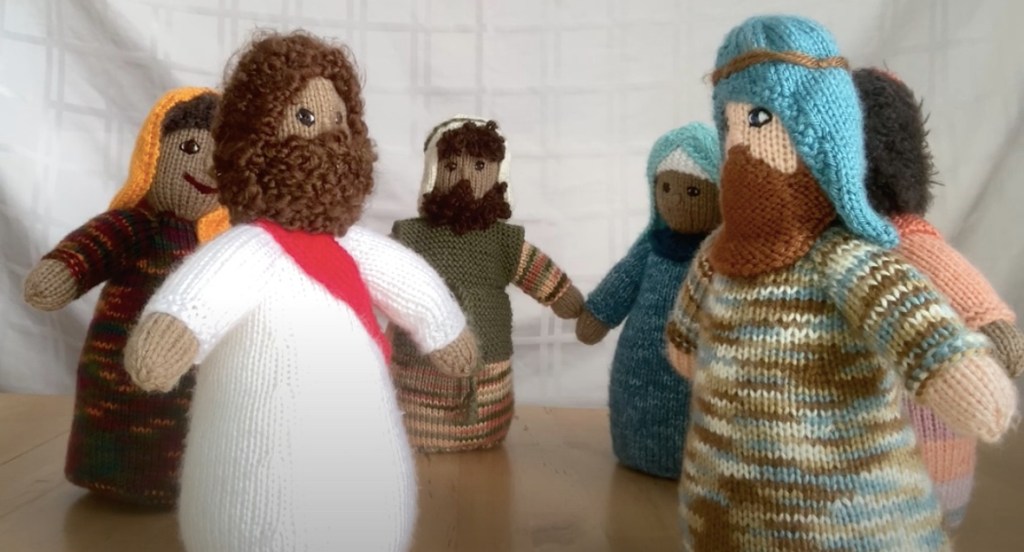
Kids Korner: I told you this would happen (April 14th)

Read Luke 24:36-48 with your family.

This is about as close to an “I told you so” as Jesus got with his followers. He tried to tell them along the way, three times in fact, but they just could not hear it. Really, it is no surprise. Hearing your friend is going to be beaten and killed in the most painful way possible, is not something that any of us want to hear.

And when the disciples were listening to what Jesus said, they were focused on the horror of his death, not what came afterwards.

This meeting was a chance for them to see that Jesus really was back from the dead, and not just a ghost. He ate with them and he let them touch him. It was important that they were paying attention, because this was the last time Jesus would be able to teach them directly.

Jesus returned from the dead to show us death is not the worst thing that could happen, and that there is so much more to life after someone we love dies.

Jesus also reminded them that now it was time for them to get to work. This was not a movement Jesus was going to lead in person anymore. Encouraging people to ask for forgiveness and choosing a new life was now the responsibility of the disciples.

The work was not finished with Jesus’ death and resurrection. In truth, it had only begun for his followers, just like it is our job to keep reminding people of Jesus love and how we can change the world.

Sunday Reflection – April 7, 2024

Recorded 2020

Jesus and Thomas

John 20 

19 The disciples were afraid of the Jewish leaders, and on the evening of that same Sunday they locked themselves in a room. Suddenly, Jesus appeared in the middle of the group. He greeted them 20 and showed them his hands and his side. When the disciples saw the Lord, they became very happy.

21 After Jesus had greeted them again, he said, “I am sending you, just as the Father has sent me.” 22 Then he breathed on them and said, “Receive the Holy Spirit. 23  If you forgive anyone’s sins, they will be forgiven. But if you don’t forgive their sins, they will not be forgiven.”

24 Although Thomas the Twin was one of the twelve disciples, he wasn’t with the others when Jesus appeared to them. 25 So they told him, “We have seen the Lord!”

But Thomas said, “First, I must see the nail scars in his hands and touch them with my finger. I must put my hand where the spear went into his side. I won’t believe unless I do this!”

26 A week later the disciples were together again. This time, Thomas was with them. Jesus came in while the doors were still locked and stood in the middle of the group. He greeted his disciples 27 and said to Thomas, “Put your finger here and look at my hands! Put your hand into my side. Stop doubting and have faith!”

28 Thomas replied, “You are my Lord and my God!”

29 Jesus said, “Thomas, do you have faith because you have seen me? The people who have faith in me without seeing me are the ones who are really blessed!”

30 Jesus worked many other miracles for his disciples, and not all of them are written in this book. 31 But these are written so that you will put your faith in Jesus as the Messiah and the Son of God. If you have faith in him, you will have true life.

Kids Korner: Thomas has questions (April 7th)

Read John 20:19-29 with your family.

Something I used to hear growing up was “just believe, don’t ask questions”. As a kid I found that hard to understand. As an adult who reads the Bible, I now know that is not the kind of faith God wants us to have.

Thomas asked questions like anyone else would. He wasn’t there the first time Jesus appeared in the Upper Room, so he had a hard time believing that Jesus had risen from the dead.

The challenge for us is that faith is believing when we can’t see something, and we are asked to have faith in Jesus and his resurrection.

However, having faith does not mean we stop asking questions. Even Jesus asked questions. That’s the only way we learn… and it’s the only way we can figure out if the adults around us know the answers or just want to stop the questions.

Sunday Reflection – Easter Sunday, March 31, 2024

The tomb was empty

Mark 16 After the Sabbath, Mary Magdalene, Salome, and Mary the mother of James bought some spices to put on Jesus’ body. Very early on Sunday morning, just as the sun was coming up, they went to the tomb. On their way, they were asking one another, “Who will roll the stone away from the entrance for us?” But when they looked, they saw that the stone had already been rolled away. And it was a huge stone!

The women went into the tomb, and on the right side they saw a young man in a white robe sitting there. They were alarmed.

The man said, “Don’t be alarmed! You are looking for Jesus from Nazareth, who was nailed to a cross. God has raised him to life, and he isn’t here. You can see the place where they put his body.  Now go and tell his disciples, and especially Peter, that he will go ahead of you to Galilee. You will see him there, just as he told you.”

When the women ran from the tomb, they were confused and shaking all over. They were too afraid to tell anyone what had happened.

Kids Korner: The tomb is empty (Easter Sunday, March 31st)

Read Mark 16:1-8 with your family.

One of the strangest parts of the story of Easter Sunday found in the Gospel of Mark, is that the women ran away when they heard about Jesus being alive again, because they were scared.

In every other gospel the women run to tell people, but in Mark they just run away.

That’s because the Gospel of Mark was written like a Greek play where the audience who first heard the story and those of us today who are hearing it again, are expected to finish the story. We are the ones who are now supposed to tell everyone that Jesus has risen!

Christ has Risen! Christ has risen indeed! Hallelujah!!

Holy Week 2024 – Holy Saturday

God surprises us by doing things we don’t expect and inverting the status quo


John 19 38 Joseph from Arimathea was one of Jesus’ disciples. He had kept it secret though, because he was afraid of the Jewish leaders. But now he asked Pilate to let him have Jesus’ body. Pilate gave him permission, and Joseph took it down from the cross.

39  Nicodemus also came with about 30 kilograms of spices made from myrrh and aloes. This was the same Nicodemus who had visited Jesus one night. 40 The two men wrapped the body in a linen cloth, together with the spices, which was how the Jewish people buried their dead. 41 In the place where Jesus had been nailed to a cross, there was a garden with a tomb that had never been used. 42 The tomb was nearby, and since it was the time to prepare for the Sabbath, they were in a hurry to put Jesus’ body there.


Prayers


from a book of jewish women’s prayers (1995)

Because we give charity on your behalf, dear souls, strengthen us to achieve the right way and not drown in the lusts of this world. Let us not be led astray by the Evil Inclination. By the merit of our forefathers Abraham, Isaac and Jacob and the merit of all righteous men and women, may we be found worthy of beholding the reconstruction of the Holy Temple and the resurrection of the dead, speedily and in our time. Amen.


Egeria in the Holy land, c. 380 CE

Egeria was a nun from France who was touring the Holy Land in the late 4th century. She was in Jerusalem during Holy Week and provides the only eye witness account of how the early church celebrated.

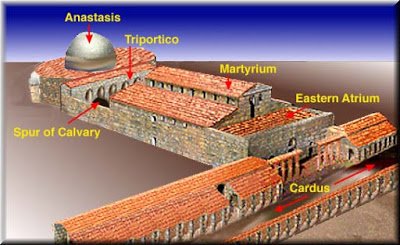
On the following day, which is Saturday, there is as usual a service at the third hour and again at the sixth hour. There is no service, however, at the ninth hour on the Saturday, for preparations is being made for the Easter vigil in the major church, the Martyrium. The Easter vigil is observed here exactly as we observe it at home. Only one thing is done more elaborately here. After the neophytes have been baptized and dressed as soon as they came forth from the baptismal font, they are led first of all to the Anastasis with the bishop. The bishop goes within the railings of the Anastasis, a hymn is sung, and he prays for them. Then he returns with them to the major church, where all the people are hoildng the vigil as is customary. Everything is done which is customarily done at home with us, and after the sacrifice (Communion/Eucharist) has been offered, the dismissal is given. After the vigil service has been celebrated in the major church, everyone comes to the Anastasis singing hymns. There, once again, the text of the Gospel of the Resurrection is read, a prayer is said, and once again the bishop offers the sacrifice.

Holy Week 2024 – Good Friday

God surprises us by doing things we don’t expect and inverting the status quo


John 19 12 Then Pilate wanted to set Jesus free. But the crowd again yelled, “If you set this man free, you are no friend of the Emperor! Anyone who claims to be a king is an enemy of the Emperor.”

13 When Pilate heard this, he brought Jesus out. Then he sat down on the judge’s bench at the place known as “The Stone Pavement.” In Aramaic this pavement is called “Gabbatha.” 14 It was about noon on the day before Passover, and Pilate said to the crowd, “Look at your king!”

15 “Kill him! Kill him!” they yelled. “Nail him to a cross!”

“So you want me to nail your king to a cross?” Pilate asked.

The chief priests replied, “The Emperor is our king!” 16 Then Pilate handed Jesus over to be nailed to a cross.

Jesus was taken away, 17 and he carried his cross to a place known as “The Skull.” In Aramaic this place is called “Golgotha.” 18 There Jesus was nailed to the cross, and on each side of him a man was also nailed to a cross.

19 Pilate ordered the charge against Jesus to be written on a board and put above the cross. It read, “Jesus of Nazareth, King of the Jews.” 20 The words were written in Hebrew, Latin, and Greek.

The place where Jesus was taken wasn’t far from the city, and many of the people read the charge against him. 21 So the chief priests went to Pilate and said, “Why did you write that he is King of the Jews? You should have written, ‘He claimed to be King of the Jews.’ ”

22 But Pilate told them, “What is written will not be changed!”


Prayers


from margaret of antioch 289-304 CE)

O Lord God, Ruler of heaven and of the earth, Creator of things visible and invisible, Giver of eternal life and Consoler of the sorrowful, make me to stand firm in the confession of they name that as with thine aid I have begun the good fight, so with thine aid I may be deemed worthy to gain the victory, lest the adversary spitefully mock at me saying: “Where is now her God in whom she trusted?”… Amen.


Egeria in the Holy land, c. 380 CE

Egeria was a nun from France who was touring the Holy Land in the late 4th century. She was in Jerusalem during Holy Week and provides the only eye witness account of how the early church celebrated.

… following the dismissal from the Cross which occurs before sunrise, everyone now stirred up goes immediately to Sion to pray at the pillar where the Lord was whipped. Returning from there then, everyone rests for a short time in his own house, and soon all are ready. A throne is set up for the bishop on Golgotha behind the Cross, which now stands there. The bishop sits on his throne, a table covered with a linen cloth is set before him, and the deacons stand around the table. The gilded silver casket containing the sacred wood of the cross is brought in and opened. Both the wood of the cross and the inscription are taken and placed on the table. As soon as they have been placed on the table, the bishop, remaining seated, grips the ends of the sacred wood with his hands, while the deacons, who are standing about, keep watch over it. There is a reason why it is guarded in this manner. It is the practice here for all the people to come forth one by one, the faithful as well as the catechumens, to bow down before the table, kiss the holy wood, and then move on. It is said that someone (I do not know when) took a bite and stole a piece of the holy cross. Therefore it is now guarded by the deacons standing around, lest there be anyone who dare come do that again… All the people pass through one by one; all of them bow down, touching the cross and the inscription, first with their foreheads, then with their eyes; and after kissing the cross they move on. No one, however, puts out his hand to touch the cross… When the sixth hour is at hand, everyone goes before the Cross, regardless of whether it is raining or whether it is hot. This place has no roof, for it is a sort of very large and beautiful courtyard lying between the Cross and the Anastasis. The people are so clustered together there that it is impossible for anything to be opened. A chair is placed for the bishop before the Cross, and from the sixth to the ninth hours nothing else is done except the reading of the passages from Scripture… There is no one young or old, who on this day does not sob more than can be imagined for the whole three hours, because the Lord suffered all this for us. After this, when the ninth hours is at hand, the passage is read from the Gospel according to Saint John where Christ gave up His spirit. After this reading, a prayer is said and the dismissal is given… After the dismissal from the Martyrium, everyone comes to the Anastasis, and after they have arrived there, the passage from the Gospel is read where Joseph seeks from Pilate the body of the Lord and places it in a new tomb… And so, those among the people who wish, or rather those who are able, to keep the vigil do so until dawn… The greater part of the people keep watch, some from evening on, others from midnight, each one doing what he can.

Holy Week 2024 – Maundy Thursday

God surprises us by doing things we don’t expect and inverting the status quo


John 13 It was before Passover, and Jesus knew that the time had come for him to leave this world and to return to the Father. He had always loved his followers in this world, and he loved them to the very end.

Even before the evening meal started, the devil had made Judas, the son of Simon Iscariot, decide to betray Jesus.

Jesus knew he had come from God and would go back to God. He also knew that the Father had given him complete power. So during the meal Jesus got up, removed his outer garment, and wrapped a towel around his waist. He put some water into a large bowl. Then he began washing his disciples’ feet and drying them with the towel he was wearing.

But when he came to Simon Peter, this disciple asked, “Lord, are you going to wash my feet?”

Jesus answered, “You don’t really know what I am doing, but later you will understand.”

“You will never wash my feet!” Peter replied.

“If I don’t wash you,” Jesus told him, “you don’t really belong to me.”

Peter said, “Lord, don’t wash just my feet. Wash my hands and my head.”

10 Jesus answered, “People who have bathed and are clean all over need to wash just their feet. And you, my disciples, are clean, except for one of you.” 11 Jesus knew who would betray him. That is why he said, “except for one of you.”

12  After Jesus had washed his disciples’ feet and had put his outer garment back on, he sat down again. Then he said:

Do you understand what I have done? 13 You call me your teacher and Lord, and you should, because that is who I am. 14 And if your Lord and teacher has washed your feet, you should do the same for each other. 15 I have set the example, and you should do for each other exactly what I have done for you. 16  I tell you for certain that servants are not greater than their master, and messengers are not greater than the one who sent them. 17 You know these things, and God will bless you, if you do them.


Prayers


from the leonine sacramentary (c. 550 CE)

O Lord our God, refresh us with quiet sleep, when we are wearied with the day’s labour; that being assisted with the help which our weakness needs, we may be devoted to thee both in body and mind; through Jesus Christ our Lord.

Be present, O Lord, to our prayers, and protect us by day and night; that in all successive changes of times we may ever be strengthened by thine unchangeableness; through Jesus Christ our Lord. Amen.


Egeria in the Holy land, c. 380 CE

Egeria was a nun from France who was touring the Holy Land in the late 4th century. She was in Jerusalem during Holy Week and provides the only eye witness account of how the early church celebrated.

On Thursday whatever is customarily done from the first cockcrow until morning and what is done at the third and sixth hours takes place as the Anastasis. At the eighth hour all the people gather as usual at the Martyrium, earlier, however, than on other days, because the dismissal must be given more quickly. When all the people have assembled, the prescribed rites are celebrated. On that day the sacrifice is offered at the Martyrium, and the dismissal from there is given around the tenth hour. Before the dismissal is given, however, the archdeacon raises his voice, saying: “At the first hour of the night let us assemble at the church which is on the Eleona, for much toil lies ahead of us on this day’s night.” Following the dismissal from the Martyrium, everyone proceeds behind the Cross, where, after a hymn is sung and a prayer is said, the bishop offers the sacrifice and everyone receives Communion. Except on this one day, throughout the year the sacrifice is never offered behind the Cross save on this day alone… everyone goes to the Eleona, to the church where the grotto is which the Lord gathered with His disciples on that day is located. And there until around the fifth hour of the night, they continually sing hymns and antiphons and read the scriptural passages proper to the place and to the day. Between these, prayers are said. Moreover, they read those passages from the Gospels in which the Lord spoke to His disciples on that day while sitting in the same grotto which lies within this church. And from here, around the sixth hour of the night, everyone goes up to the Imbomon, singing hymns. That is the place from which the Lord ascended into heaven. There also they sing hymns and antiphons and read scriptural passages proper to the day; and whatever prayers are said, whatever prayers the bishop recites, they will always be proper to the day and to the place.

As soon as it begins to be the hour of the cockcrow, everyone comes down from the Imbomon singing hymns and proceeds towards the very place where the Lord prayed, as it is written in the Gospel: “And He went as far as a stone’s throw and He prayed”, and so forth. On that spot stands a tasteful church… Next, everyone, including the smallest children, walk down from there to Gethsemani, accompanying the bishop with hymns. Singing hymns, they come to Gethsemani very slowly on account of the great multitude of people, who are fatigued by vigils and exhausted by the daily fasts… On arriving in Gethsemani a suitable prayer is first said, followed by a hymn, and then the passage from the Gospel describing the arrest of the Lord is read. During the reading of this passage there is such moaning and groaning with weeping from all the people that their moaning can be heard practically as far as the city… From there, throughout the center of the city, all without exception are ready at hand, the old and the young, the rich and the poor, everyone: and on this day especially no none withdraws from the vigil before early morning… When they finally arrive before the Cross, it is already beginning to be broad daylight. There then is read the passage from the Gospel where the Lord is led before Pilate, and whatsoever words are written that Pilate spoke to the Lord or to the Jews, all this is read.

Holy Week 2024 – Wednesday

God surprises us by doing things we don’t expect and inverting the status quo


John 13 21 After Jesus had said these things, he was deeply troubled and told his disciples, “I tell you for certain that one of you will betray me.” 22 They were confused about what he meant. And they just stared at each other.

23 Jesus’ favorite disciple was sitting next to him at the meal, 24 and Simon motioned for this disciple to find out which one Jesus meant. 25 So the disciple leaned toward Jesus and asked, “Lord, which one of us are you talking about?”

26 Jesus answered, “I will dip this piece of bread in the sauce and give it to the one I was talking about.”

Then Jesus dipped the bread and gave it to Judas, the son of Simon Iscariot. 27 Right then Satan took control of Judas.

Jesus said, “Judas, go quickly and do what you have to do.” 28 No one at the meal understood what Jesus meant. 29 But because Judas was in charge of the money, some of them thought that Jesus had told him to buy something they needed for the festival. Others thought that Jesus had told him to give some money to the poor. 30 Judas took the piece of bread and went out.

It was already night.

31 After Judas had gone, Jesus said:

Now the Son of Man will be given glory, and he will bring glory to God. 32 Then, after God is given glory because of him, God will bring glory to him, and God will do it very soon.


Prayer


from the didascalia (c. 230 CE)

Of your great kindness, Lord, you promised to forgive those who were sorry they had sinned against you; of your great mercy, you declared that sinners should be saved by repentance… prescribe repentance to me, because I am a sinner – my sins, indeed, are more numerous than the grains of sand on the seashore. I have fallen so often, Lord, and I am not fit to raise my eyes to Heaven because I have so many sins on my conscience…

You are indeed the God of the repentant. Your treatment of me shows how kind you are: in your great mercy you would save even a wretch as I.

I will sing your praises all the days of my life, like the armies of Heaven, which never cease to acclaim your greatness.

Glory to you throughout the ages. Amen.


Egeria in the Holy land, c. 380 CE

Egeria was a nun from France who was touring the Holy Land in the late 4th century. She was in Jerusalem during Holy Week and provides the only eye witness account of how the early church celebrated.

On Wednesday everything is done throughout the day from the first cockcrow just as on Monday and Tuesday. However, following the dismissal at night at the Martyrium, the bishop is led to the accompaniment of hymns to the Anastasis. He goes immediately into the grotto within the Anastasis, and he stands within the railing. A priest, however, standing in front of the railing, takes up the Gospel and reads that passage where Judas Iscariot went to the Jews to set the price they would pay him to betray the Lord. While this passage is being read, there is such moaning and groaning from amongst the people that no one can help being moved to tears in that moment. Afterwards, a prayer is said, first the catechumens and then the faithful are blessed, and finally the dismissal is given.