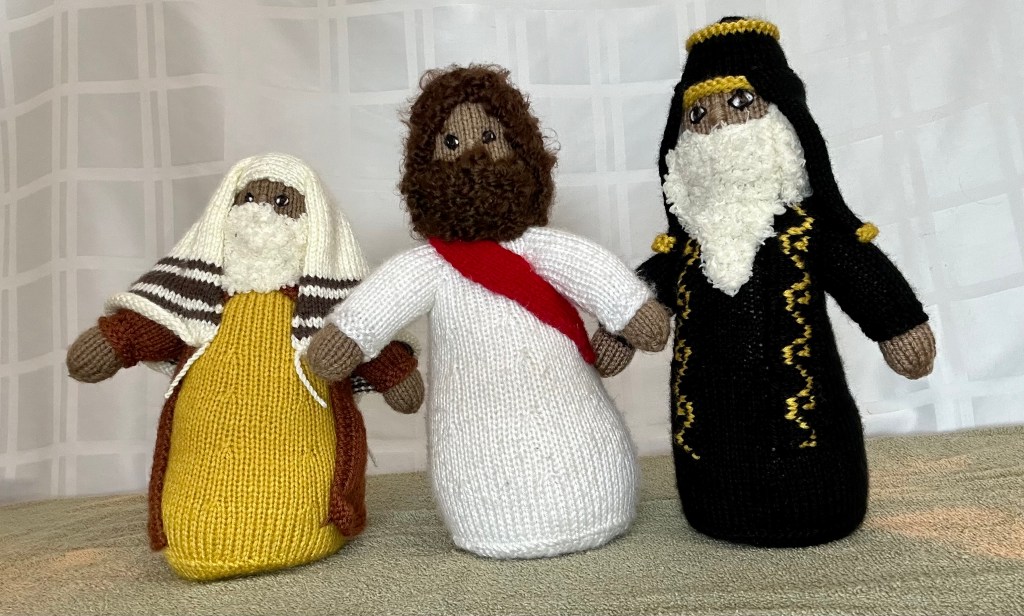
Sunday Reflection – October 1, 2023

Challenges from the Temple priests

Matthew 21 23 Jesus had gone into the temple and was teaching when the chief priests and the leaders of the people came up to him. They asked, “What right do you have to do these things? Who gave you this authority?”

24 Jesus answered, “I have just one question to ask you. If you answer it, I will tell you where I got the right to do these things. 25 Who gave John the right to baptize? Was it God in heaven or merely some human being?”

They thought it over and said to each other, “We can’t say God gave John this right. Jesus will ask us why we didn’t believe John. 26 On the other hand, these people think John was a prophet, and we are afraid of what they might do to us. That’s why we can’t say it was merely some human who gave John the right to baptize.” 27 So they told Jesus, “We don’t know.”

Jesus said, “Then I won’t tell you who gave me the right to do what I do.”

28 Jesus said:

I will tell you a story about a man who had two sons. Then you can tell me what you think. The father went to the older son and said, “Go work in the vineyard today!” 29 His son told him he would not do it, but later he changed his mind and went. 30 The man then told his younger son to go work in the vineyard. The boy said he would, but he didn’t go. 31 Which one of the sons obeyed his father?

“The older one,” the chief priests and leaders answered.

Then Jesus told them:

You can be sure tax collectors and prostitutes will get into the kingdom of God before you ever will! 32  When John the Baptist showed you how to do right, you would not believe him. But these evil people did believe. And even when you saw what they did, you still would not change your minds and believe.
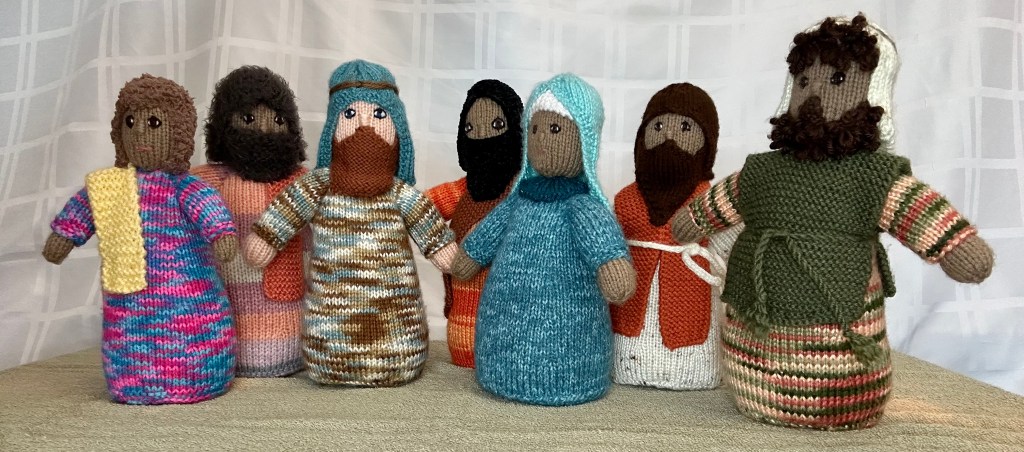
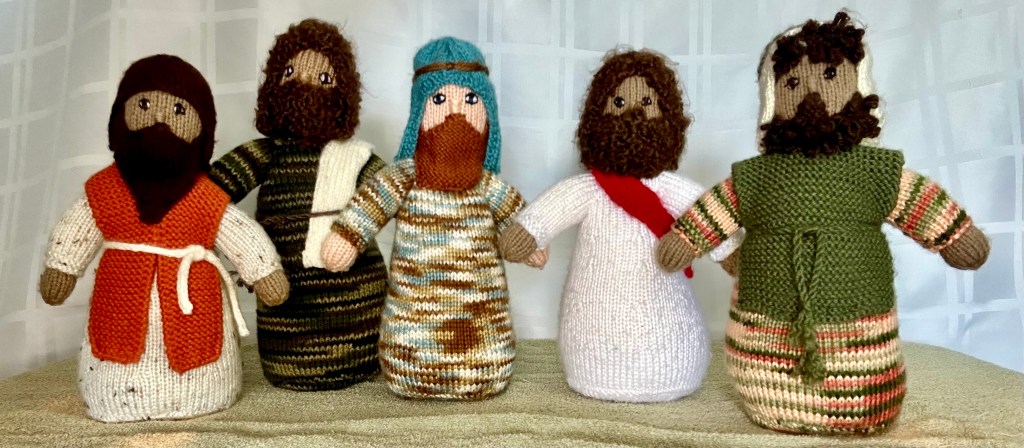
Kids Korner: Temple priests challenge Jesus (Oct. 1st)

Read Matthew 21:23-32 with your family.

Jesus did not come to start a new religion, he came to fix the problems in the Hebrew tradition that he loved and had been raised in. He was very frustrated with the priests in the Temple because they were teaching rules about how to dress and eat, but they weren’t teaching the people how to love each other.

Jesus wanted them to change. He wanted them to listen to what he was trying to teach them, but they refused to hear anything.

Instead, the priests in the Temple got very angry with Jesus and eventually helped to get him killed. This story is part of a larger story we call Holy Week, that ends in Jesus being killed on Good (God’s) Friday and rising from the dead on Easter Sunday.

The priest asked Jesus who gave him authority because the priest wanted power to stop Jesus teaching about God. Unfortunately for the priest, Jesus was very smart and he challenged the priest instead. The priest didn’t want to answer because he knew any answer he gave would anger the people.

Jesus wasn’t concerned about angering people, he was only interested in showing how much God loves and accepts everyone, and how the Temple priests had forgotten about God’s love.

Following Jesus but not attending church

Almost everywhere I preach I’m asked the same question – do I think the church will survive.

That is a loaded question that needs to be looked at from a lot of different angles. What is church? Are we talking something like Jesus’ early followers or are we talking about modern institutions? Are we talking about a lifestyle or are we talking about a faith statement? Does denominational affiliation come into the question? Orthodox traditions date themselves back 2000 years while most Pentecostal and Non-denominational groups only 100. Is that what we think about when we use the word ‘church’?

Regardless, my answer is always the same: Our institutions? Probably not, at least not as they are now or as they used to be in the heyday following World War II.

But our faith? The lifestyle of Jesus followers? The drive for Christ-demonstrated equity and justice? Absolutely. That will go on.

There is both an inherent arrogance and a significant lack of social historical knowledge behind the question of whether the church will survive. For over two millennia people who call themselves Christian, or who have at least tried to live their lives as Jesus asked us to do, have faced hardships. Many times throughout history the church has not been the most popular place in the culture. We have experienced doubts and departures before. We are not unique in watching church buildings become empty.

Every 500 years the church goes through a crisis and emerges as something new. We are living in that time of transition.

And yet Christianity is strong. It might not call itself that, but it can be seen in society’s demanding equal rights for minorities and abused people. We can see the call of Jesus in our social disgust at the high food costs and the inability of people to find affordable homes. We hear it in the stories of indigenous peoples who are finally getting a platform to speak from their culture. We witness it in younger generations who are using social media to connect and create social change. We find it in the anger that is leading people to organize and strike for better pay in an economy that only rewards the rich. We feel it in the desperation of people who don’t have universal health care and those who fear their universal health care will be taken away.

The followers of Jesus are everywhere.

But they are probably not sitting inside a building.

Sunday Reflection – September 24, 2023

Workers in the vineyard

Matthew 18 As Jesus was telling what the kingdom of heaven would be like, he said:

Early one morning a man went out to hire some workers for his vineyard. After he had agreed to pay them the usual amount for a day’s work, he sent them off to his vineyard.

About nine that morning, the man saw some other people standing in the market with nothing to do. He promised to pay them what was fair, if they would work in his vineyard. So they went.

At noon and again about three in the afternoon he returned to the market. And each time he made the same agreement with others who were loafing around with nothing to do.

Finally, about five in the afternoon the man went back and found some others standing there. He asked them, “Why have you been standing here all day long doing nothing?”

“Because no one has hired us,” they answered. Then he told them to go work in his vineyard.

 That evening the owner of the vineyard told the man in charge of the workers to call them in and give them their money. He also told the man to begin with the ones who were hired last. When the workers arrived, the ones who had been hired at five in the afternoon were given a full day’s pay.

10 The workers who had been hired first thought they would be given more than the others. But when they were given the same, 11 they began complaining to the owner of the vineyard. 12 They said, “The ones who were hired last worked for only one hour. But you paid them the same that you did us. And we worked in the hot sun all day long!”

13 The owner answered one of them, “Friend, I didn’t cheat you. I paid you exactly what we agreed on. 14 Take your money now and go! What business is it of yours if I want to pay them the same that I paid you? 15 Don’t I have the right to do what I want with my own money? Why should you be jealous, if I want to be generous?”

16  Jesus then said, “So it is. Everyone who is now last will be first, and everyone who is first will be last.”

Kids Korner: Everyone treated equally (Sept 24th)

Read Matthew 20:1-16 with your family.

The workers who had been in the field since dawn had a point – why should those who showed up only an hour ago get the same pay? If they only spent one tenth of the time we did, then we should get paid ten times more. Right?

That makes sense in our world. And it probably made sense in the world where Jesus grew up. However, Jesus was trying to teach people a different way of thinking about God’s world.

Jesus knew that those who only worked for one hour were just as important. They deserved to be valued too. It wasn’t their fault that they weren’t picked first.

We have to change our understanding of who is important and start seeing people the way God sees people – as everyone matters and everyone is equally loved.

That is the most important lesson that Jesus ever taught.

Ecclesiastes: There is a time

Staying in the here and now can be a challenge for a lot of us, especially when our To Do lists seem more plentiful than the hours of the day. It is hard to make time for the people who matter in our lives, let alone carve out time to work on our faith.

The writer of Ecclesiastes 3 understood that reality. So often we think that ancient people had a more simple life than we do, but they really didn’t. They had all the relationship and work struggles that we have with fewer tools or the technology that punctuates our modern lives. They rushed to get everything done too.

For everything there is a season.

We can’t do everything all at once, no matter how good we are at staying focused or how much we buy into the myth of multitasking. That’s why it is so important to really hear the words of wisdom written thousands of years ago.

Life comes to us in waves and patterns. We can only plant when the soil is fertile, be that physically or metaphorically. We can only harvest with there is maturity. We mourn when the time comes, but we laugh at other times.

We have to allow ourselves to trust that everything comes in its own time and not rush something before it is ready.

Reevaluate your To Do list. Does everything need to be done now, or might a later time be better? Are the things on that list important to others or are they on that list because you think they need to be there? What can be tasked to others? What really doesn’t matter and can be let go of altogether?

There is a time to keep and a time to throw away. There is a time to speak and a time to be silent. And there is a time to dance.

Sunday Reflection – September 17, 2023

Jesus is the Messiah

Matthew 18 21  Peter came up to the Lord and asked, “How many times should I forgive someone who does something wrong to me? Is seven times enough?”

22  Jesus answered:

Not just 7 times, but 77 times! 23 This story will show you what the kingdom of heaven is like:

One day a king decided to call in his officials and ask them to give an account of what they owed him. 24 As he was doing this, one official was brought in who owed him 50,000,000 silver coins. 25 But he didn’t have any money to pay what he owed. The king ordered him to be sold, along with his wife and children and all he owned, in order to pay the debt.

26 The official got down on his knees and began begging, “Have pity on me, and I will pay you every cent I owe!” 27 The king felt sorry for him and let him go free. He even told the official that he did not have to pay back the money.

28 But as this official was leaving, he happened to meet another official, who owed him 100 silver coins. So he grabbed the man by the throat. He started choking him and said, “Pay me what you owe!”

29 The man got down on his knees and began begging, “Have pity on me, and I will pay you back.” 30 But the first official refused to have pity. Instead, he went and had the other official put in jail until he could pay what he owed.

31 When some other officials found out what had happened, they felt sorry for the man who had been put in jail. Then they told the king what had happened. 32 The king called the first official back in and said, “You’re an evil man! When you begged for mercy, I said you did not have to pay back a cent. 33 Don’t you think you should show pity to someone else, as I did to you?” 34 The king was so angry that he ordered the official to be tortured until he could pay back everything he owed. 35 That is how my Father in heaven will treat you, if you don’t forgive each of my followers with all your heart.

Kids Korner: Forgiving others (Sept 17th)

Read Matthew 18:21-35 with your family.

You might have heard people tell you to “forgive and forget”. A lot of people think those are Jesus’ words or they are from somewhere else in the Bible, but they are not. All the Bible says is to forgive as often as you have to.

Forgiveness is hard. Sometimes you can do it once and everything is fine. But sometimes the hurt is deeper and you don’t know if you can ever forgive the person. Jesus says to keep trying.

And sometimes the hurt is bad enough you need to tell another grown up and keep telling until someone believes you and wants to help. Forgiving someone doesn’t mean they don’t have consequences. Forgiving someone only means you are letting go of your anger and hurt feelings. It’s still up to the other person to do the right thing and take responsibility.

Something new

This year has been a year of transitions for me. I’ve moved. I’ve reduced some of my volunteer commitments so I can concentrate on my professional life. All of my kids are now on their own, working, studying and enjoying life. And I’ve spend a considerable amount of time dreaming about how to grow Barefoot Evangelist.

To that end I’ve added Kofi to my website. Starting at $5, it collects donations to help with the costs of my ministry. So you can now ‘buy coffee’ for the Barefoot Evangelist.

Also, I am now on TikTok.

I hope you will enjoy more changes and content on this website as we move forward.

Please follow me on Barefoot Evangelist and subscribe to my YouTube channels: Barefoot Evangelist and The Preacher and The Pagan podcast.