How can we ‘pray without ceasing’?

The first time I remember hearing the injunction to “pray without ceasing” (1 Thessalonians 5:17), I thought it was the strangest thing ever. How can you do that? We have lives that need living, after all.

Admittedly I was a teenager at the time, and my imagination was still developing.

We do tend to take things literally, at least when we first hear something from the Bible. We have been conditioned that way through Sunday School and our cultural understanding of Christianity. It is one of our first reactions, so we need to wait for our second reaction before we make a move.

Pray unceasingly… it is possible. We don’t have to change our lives to do it though, just change how we understand prayer.

When many of us think about prayer, we think about long worded petitions to God, as we hold a certain prayer position that often includes our heads bowed, eyes closed, and hands pressed together. But prayer is so much more.

Walking prayers, like walking meditations, are things we do all the time, and we probably don’t even realizing it. Thoughts flow through our minds and get some attention before they flow out again. Those are prayer.

Hearing sirens and hoping no one is seriously hurt, is prayer.

Feeling joy at the wind blowing our hair and the sunshine on our face, is prayer.

Desperation to get out of a scary or abusive situation, is prayer.

Every moment of every day, every thought and emotion, every reaction or observation… those are all prayers.

We do not need to be long winded when spending time with God. Even in the Gospels Jesus says “when you pray, pray like this”. He did not say ‘pray this prayer’, as the church has reported for the last 2000 years. He said pray LIKE this.

Pray for what is around you, your concerns, your joys, your guilt, your awareness.

Pray with your heart, your soul, and your mind.

Pray with words and emotions and intentions.

Pray without ceasing, because every moment is an opportunity to be in God’s presence.
Sunday Reflection – September 14, 2025

(There seems to be a problem with this site and YouTube videos. If by the time you are viewing this the problem has continued, you can access the reflection video at this link: https://www.youtube.com/watch?v=6quhgUShFlI)

Lost Things

Luke 15 Tax collectors and sinners were all crowding around to listen to Jesus. So the Pharisees and the teachers of the Law of Moses started grumbling, “This man is friendly with sinners. He even eats with them.”

Then Jesus told them this story:

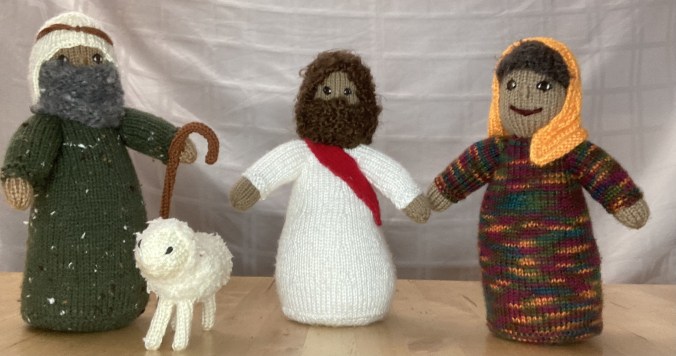
If any of you has 100 sheep, and one of them gets lost, what will you do? Won’t you leave the 99 in the field and go look for the lost sheep until you find it? And when you find it, you will be so glad that you will put it on your shoulder and carry it home. Then you will call in your friends and neighbors and say, “Let’s celebrate! I’ve found my lost sheep.”

Jesus said, “In the same way there is more happiness in heaven because of one sinner who turns to God than over 99 good people who don’t need to.”

Jesus told the people another story:

What will a woman do if she has ten silver coins and loses one of them? Won’t she light a lamp, sweep the floor, and look carefully until she finds it? Then she will call in her friends and neighbors and say, “Let’s celebrate! I’ve found the coin I lost.”

10 Jesus said, “In the same way God’s angels are happy when even one person turns to him.”

Kids Korner: Lost Things (September 14th)

Read Luke 15:1-10 with your family.

We have had a lot of hard and heavy things to talk about in the stories these past few weeks. This week, however, we have a nicer story. Something that reminds us how much God loves us.

This week we are reading the stories of the lost sheep and the lost coin. The Gospel of Luke often does this, pairs a story about a man and a story about a woman, so we can really see what Jesus is trying to teach us.

Jesus is telling us that God loves us, no matter what. And if we, or anyone really, starts thinking God does not matter or does not care, God shows that is not true. God will leave all the rest of the people alone just to go after the one who is lost.

That is a great promise. No one is ever forgotten.

Were there white people in the Bible?

I am sure by now most have seen the meme going around that declares there were no white people in the Bible and then suggest everyone waits while the person reading it gets with the message.

I respect the intent and the point being made. It is a direct rebuttal to “white Jesus”, that is not factually accurate in any way, shape or form.

However…

This is where as a Christian historian I have to pull the plug. I try to stay away from terms and arguments like “always” and “never” unless it is extreme circumstances, as they usually get a person in trouble. It sets up a dynamic that demands analysis, and so let’s analyse.

In this case, the meme is making a statement that is factually unprovable. There were thousands of people involved in the Bible as writers, characters, and editors. The Bible itself was composed orally for centuries before it was put into written form. Over that period more than a dozen cultures interacted, clashed, fought wars, invaded and expelled the people who had once lived in that territory. Bottom line: people moved around. This is before we take into account trade routes and caravans moving throughout Europe, Asia and Africa.

By the time Paul started writing his letters c. 50 CE, Rome had expanded to modern day Germany, Austria, Belgium, England, and all of Europe from south and west of those points. These people integrated into all levels of Roman society. Some Roman troops brought families with them wherever they were sent, and some of those family members stayed to form relationships with the local population. It was also the practice of Rome to move around military and government officials so no one would be fighting their own people.

So, were their white people in the Bible? Probably. But we have no idea who as none of this is provable. The vast majority, including Jesus, were Semitic peoples. That cannot be disputed. But to say absolutely that there were no white people in the Bible? No, we cannot do that with any credibility.

Sunday Reflection – September 7, 2025

The Cost of Discipleship

Luke 14 25 Large crowds were walking along with Jesus, when he turned and said:

26  You cannot be my disciple, unless you love me more than you love your father and mother, your wife and children, and your brothers and sisters. You cannot follow me unless you love me more than you love your own life.

27  You cannot be my disciple unless you carry your own cross and follow me.

28 Suppose one of you wants to build a tower. What is the first thing you will do? Won’t you sit down and figure out how much it will cost and if you have enough money to pay for it? 29 Otherwise, you will start building the tower, but not be able to finish. Then everyone who sees what is happening will laugh at you. 30 They will say, “You started building, but could not finish the job.”

31 What will a king do if he has only 10,000 soldiers to defend himself against a king who is about to attack him with 20,000 soldiers? Before he goes out to battle, won’t he first sit down and decide if he can win? 32 If he thinks he won’t be able to defend himself, he will send messengers and ask for peace while the other king is still a long way off. 33 So then, you cannot be my disciple unless you give away everything you own.

Kids Korner: Preparing to follow Jesus (September 7th)

Read Luke 14:25-33 with your family.

We spend a lot of time talking about God’s call to help people who need our help and what we can do to help them. But we do not spend as much time talking about our plan for how to help, and what we need to have with us in order to help others.

In our story today Jesus was talking about the ‘cost of discipleship’ – how to know if we are prepared to get into the middle of something difficult so we can make a difference, or if we should find other ways to help solve the problem.

Jesus used examples that we would understand today, building a house and going to war. Neither of those are things we start without making sure we have what we need. We do not send people to war without a lot of equipment, and building a home or a tower takes a lot of bricks.

He also tells us that our family might not understand how important this is to us, and that’s okay. Sometimes following Jesus means making choices that are different from our friends and those we love.

What is wrong with being wrong?

What is wrong with asking questions first rather than jumping to conclusions?

Several years ago I passed a rally where recently ‘born again’ new Christians were trying to convince others that what they experienced was the way to real faith. They were definitely caught up in the excitement of something new. I got into a conversation with a few of them and was correcting some of their misassumptions about the Bible – which they had been taught to read as tracts, not in context. Their leader, pastor maybe, stormed over and started yelling at me. I said I was only helping to clarify some facts and than I had an education in the subject. He snarled and threatened me, and I can’t remember how the conversation got there but he demanded to know from me if Jesus sinned. I simply asked him what he meant by the word ‘sin’. He scoffed and stormed away.

It was a simple question. I couldn’t give him a yes or no answer until I knew what he meant by the words he used. What if I was wrong?

This past week I have been dealing with a number of situations where people outside of religion and the church have been wrong. But rather than ask questions, they have forced their opinions on others. Why do we do that? What is so wrong about being wrong? And what is so difficult about asking questions first and recognizing that we might not have the full picture?

People often tell me I know so much about a subject, and while I’m widely read, I also go back over information to make sure I’m right before I present it. And then if I’m challenged I can either say no, I followed through on that too, or, I can say I never thought of looking at things that way. I could be wrong.

It’s okay to be wrong. Even Jesus was wrong. In the story of the  Syrophoenician woman (Mark 7:24-30, and Matthew 15:21–28), she challenged Jesus. When Jesus response to her was tone deaf, she rebutted with an expression of faith and belief, calling Jesus up short. In the end he had to agree with her and did as she asked.

All of us can be wrong, but rather than hide that or avoid that, we should welcome being wrong as the first step to learning. It’s okay to be wrong, just make sure it leads to growth.

Sunday Reflection – August 31, 2025

Pick the less important seat

Luke 14 One Sabbath, Jesus was having dinner in the home of an important Pharisee, and everyone was carefully watching Jesus.

Jesus saw how the guests had tried to take the best seats. So he told them:

 When you are invited to a wedding feast, don’t sit in the best place. Someone more important may have been invited. Then the one who invited you will come and say, “Give your place to this other guest!” You will be embarrassed and will have to sit in the worst place.

10 When you are invited to be a guest, go and sit in the worst place. Then the one who invited you may come and say, “My friend, take a better seat!” You will then be honored in front of all the other guests. 11  If you put yourself above others, you will be put down. But if you humble yourself, you will be honored.

12 Then Jesus said to the man who had invited him:

When you give a dinner or a banquet, don’t invite your friends and family and relatives and rich neighbors. If you do, they will invite you in return, and you will be paid back. 13 When you give a feast, invite the poor, the paralyzed, the lame, and the blind. 14 They cannot pay you back. But God will bless you and reward you when his people rise from death.

Kids Korner: Act with humility (August 31st)

Read Luke 14:1, 7-14 with your family.

Have you ever been to a wedding? Lots of times kids and teenager are never invited, but sometimes they are. When you get to the reception it is usually a big hall, and almost every table has cards that say who is supposed to sit where. The people getting married and their families spend a lot of time making that decision so that no one sits in the wrong space or at the wrong table.

In Jesus’ time, there were no place cards, so when people attended a wedding reception, something that could go on for days if the family was rich enough and there was enough food and drink, people had to find their own seat. This story is like a warning. Pick the seat that you think is worse than the others. If the host is happy with where you are sitting, you have picked well. However, if the host wants you closer to the main table, have the host make that decision, not you. How embarrassing it would be in a room full of people to have the host tell you to move because someone else was more important.

Jesus was using this as an example of what it is like in God’s world. Do not assume that we are as important as we think we are. Now… the difference is in God’s world all of us are equal so there is no better or worse than anyone else. But in our world today, it is hard to remember that.

Should we pray for a revival?

During congregational prayers this past Sunday, one of the older men said he wanted to pray for a revival of the church. He of course meant the church that he remembered from his youth, probably 1950’s or 1960’s. In his memory that was when the church was really good, when his social life revolved round youth groups, sports groups, dinners, choir, Sunday school, and regular worship.

I don’t think he appreciated how I actually prayed about that revival, about how in a post-Covid world, it would look different than church revivals of the past.

Many of the older members of our congregations look back at the church of their youth with fondness, nostalgia really, and wish they had that again. But nostalgia is a trap, and what they remember is probably not what it was really like: women being denied leadership, no one of ethnic difference being welcome, only one or two socio-economic levels represented. And judgy…

Over our 2000 years attendance at church has ebbed and flowed, more attendance in the hard times, less in the good times. Every generation has had a new way to follow the teachings of Jesus Christ. For many people today, finding their faith happens outside the traditional institutional church, not inside.

We have to give up the idea that revival means filling church buildings on Sunday morning. Our commission is to help people discover and understand that Jesus shared love with everyone. Jesus never asked us to fill church buildings. Jesus asked that we share the Good News that we can build a new world by caring for each other and working together.

So sure… we prayed for revival, but we can’t control how the Holy Spirit moves through people. The only thing we can do is accept that when revival does happen, it won’t look the way we imagined it.